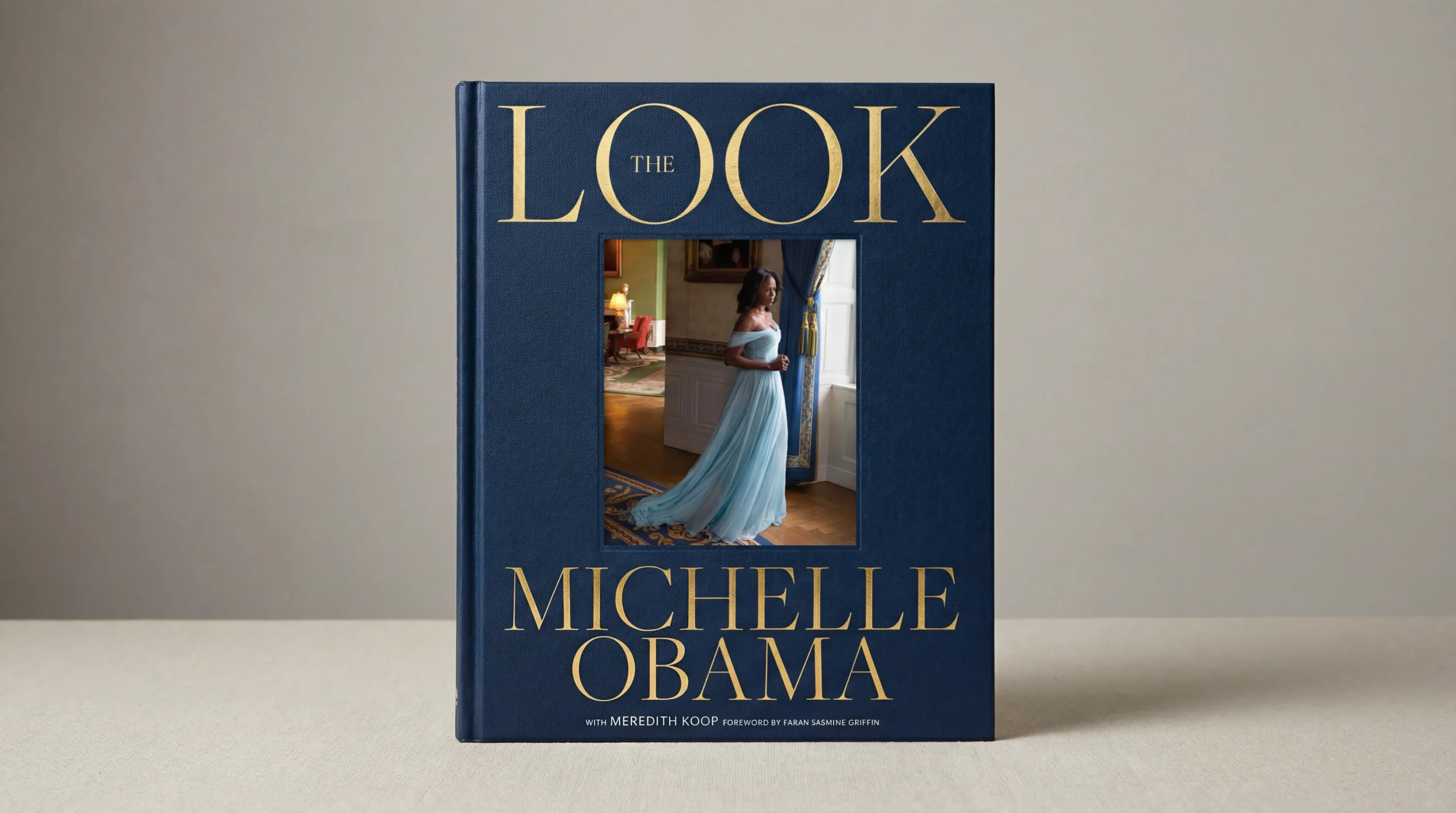
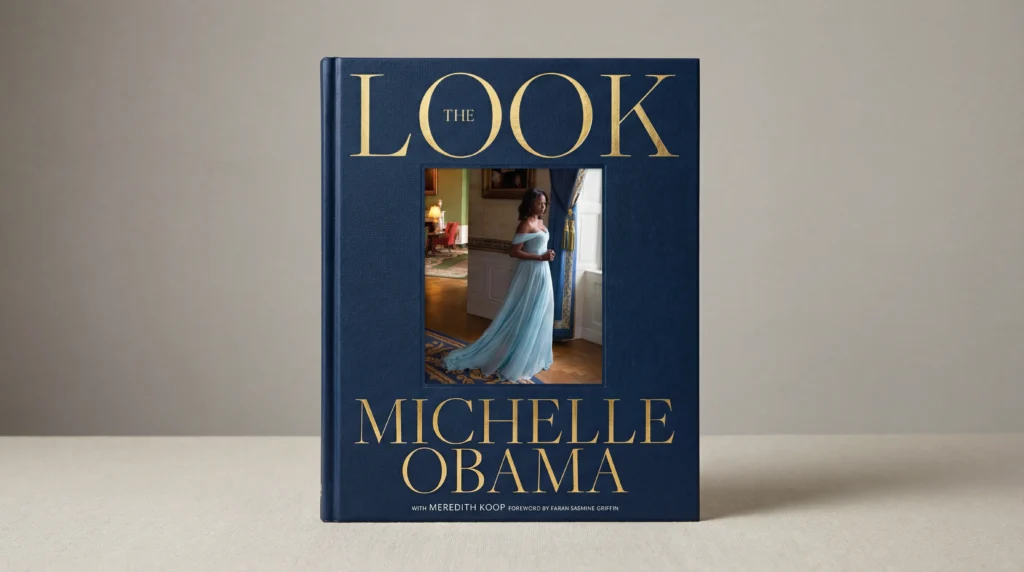
This month’s book of the month is by none other than the woman who took on the role of First Lady and transformed it from a position into a verb: Michelle Obama. While many of us are familiar with her as a bestselling author and masterful orator, this book offers a compelling glimpse into her conscious decision to employ clothes as an instrument of communication.
Navigating Scrutiny as First Lady
Having always admired her style, both as First Lady and post White House, I found it fascinating to hear her perspective, and the inside story from the rest of her team, about how she confronted the very real challenge of navigating an unimaginable level of scrutiny.
Many celebrities have actively sought fame, but here was someone who spent a milestone moment in her husband’s career, during his election victory as Senator in 2004, fervently hoping that it wouldn’t be the beginning of a trajectory that brought their family to the White House.
When that in fact did happen, she was thrust onto the world stage for the next eight years, tasked with the dual responsibility of representing her country abroad as well as her fellow women of color. 689 articles were written about her arms alone. That unimaginable level of scrutiny is what led her stylist to compare the sudden intensity of public attention to “being shot out of a cannon”.
Relatability, Working Motherhood, and Image
One of the strengths of this book mirrors the strength of its author and protagonist: the relatability of a busy working mom who was used to shopping for important events on her lunch break and who, like many of us, didn’t want her values to be overshadowed by her appearance.
“I quickly came to understand that I had to be very clear and careful about how I presented myself so that my appearance wouldn’t become a narrative, a storyline. It’s a paradox most of us know all too well, we want to be able to embrace the beauty of fashion, to experiment creatively with our hair, makeup and style, to dress in a way that flatters us and made us feel good. But at the same time, many women don’t want to be judged solely for our physical appearance; we don’t want our looks to detract from our ideas and accomplishments.”
What a refreshing Judo move to take that challenge and turn it into an opportunity:
“As determined as I was not to let any superficial focus hijack the message, I also knew there was an opportunity to flip the script and use clothing to my advantage.”
African American Fashion Culture and Purposeful Style
What I found especially interesting was her reflection on African American fashion culture in her upbringing. She describes style as far more than aesthetics; it was a form of cultural expression, creativity, resilience, and pride, and a way of making a statement in a society where voices like hers were not always welcomed or amplified.
Looking good was never superficial: it was purposeful.
She carried this ethos directly into her role as First Lady.
“As First Lady, you’re put on a de facto pedestal because the role has historically carried so much ceremonial significance, representing the notion of womanhood itself, of femininity and the spousal ideal.”
Approachability, Warmth, and Public Image
Rather than adopting a distant, untouchable image, she consciously chose the opposite.
“I wanted to invite people in, for an embrace, or a meaningful conversation, and even into the White House itself. My clothing had to reflect that.”
That intention, warmth, openness, and approachability became one of the defining characteristics of her public image.
Because she always struck me as so confident, colorful, and at ease in her role, I was intrigued to learn about her early discomfort in the spotlight. She admits that she was nervous about meeting Oprah Winfrey, something that feels almost unimaginable given the poised, statuesque presence we associate with her today.
Getting Dressed, Color, and Intentional Choice
Equally surprising was her admission that, in her previous life as a working mother, she approached getting dressed almost “like a man”, functionally and without joy, and that she hated shopping. Makeup, too, was unfamiliar terrain. These moments make her feel not only relatable, but deeply human.
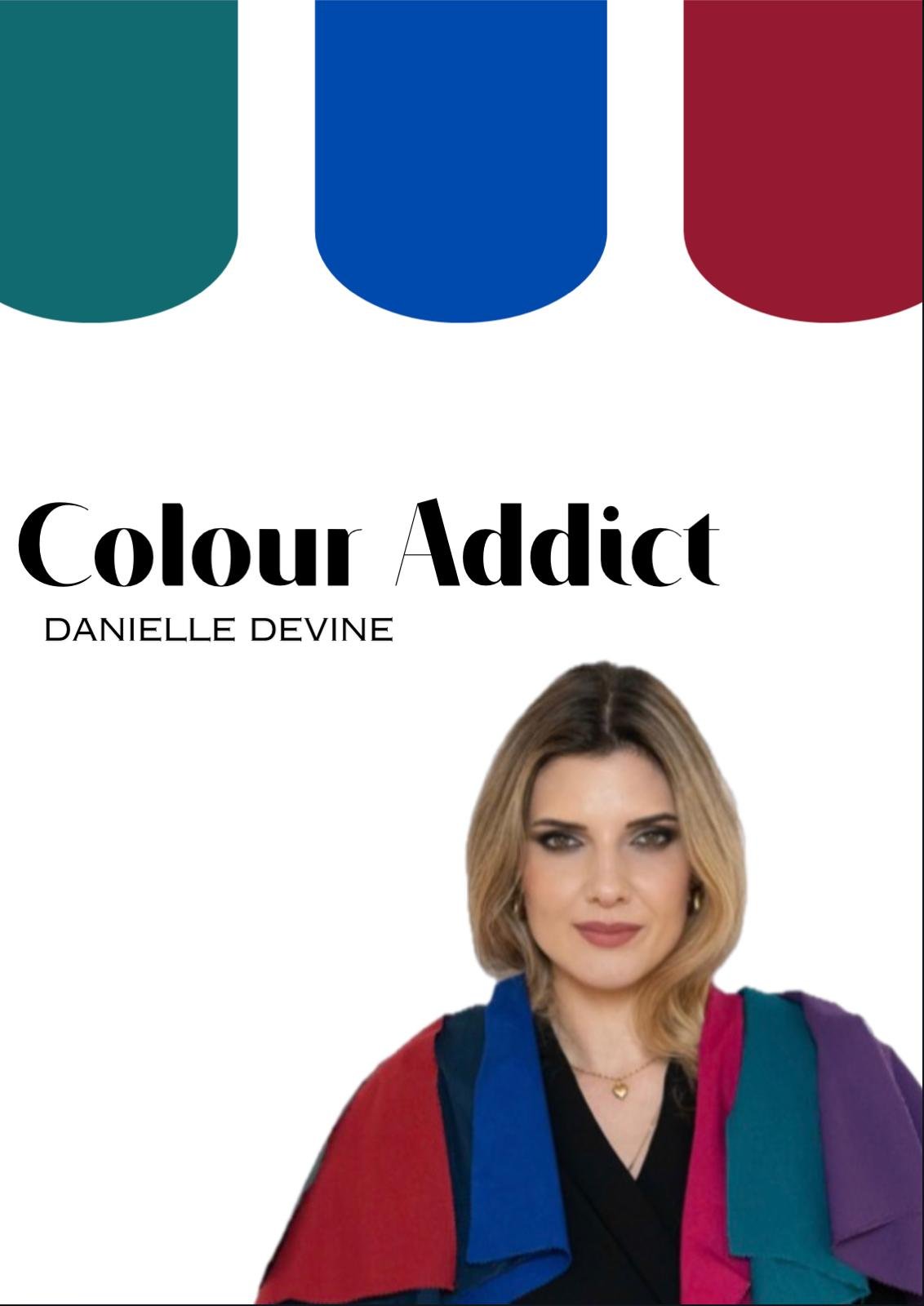
As a self-proclaimed colour addict, one of my favorite revelations in the book is just how central color was to her wardrobe decisions. Nothing was accidental; she chose yellow for the inauguration deliberately, sunny, hopeful, optimistic.
“One of the first major public-facing decisions any First Lady makes is her inaugural gown. It’s as much a political decision as it is an aesthetic one.”
She also deliberately chose emerging designers to put them in a spotlight they might otherwise not have access to. Nearly every wardrobe choice during her eight years in the White House carried that same dual weight. She was intentional about spotlighting emerging and underrepresented American designers, often commissioning custom pieces with practical adaptations, such as detachable sleeves, to suit the realities of her role.
Comfort, Relatability, and the “O Test”
Her guiding principles were simple yet profound:
“Do I love it? Does it reflect who I am?”
Comfort mattered, too. She wanted to move, dance, engage, and connect, not merely pose. She preferred gowns designed for motion rather than spectacle, avoided high heels whenever possible, and even considered whether an outfit would work for moments like leading children in jumping jacks on the White House lawn, including a Guinness World Record moment.
She also wanted her clothing to reinforce the atmosphere she and Barack were working to create in the White House, vibrant, welcoming, warm, and approachable, while remaining sensitive to the broader social and economic context of the country.
In the aftermath of the Great Recession, this meant deliberately mixing high fashion with accessible brands. When Jay Leno jokingly asked her if her outfit cost sixty thousand dollars, her answer was immediate: “J. Crew”.
But perhaps the most telling detail of all is what she calls the “O Test”. As Hugger-in-chief, her Instagram tag to this day, the litmus question for any potential outfit was: “Could I give anyone a hug at any moment?”
When Fashion Steps Aside
What I found especially powerful was her acknowledgment that sometimes fashion needed to step aside entirely.
“The work of a First Lady is often about showing up at others’ worst moments, and I never wanted to bring the distraction of fashion into a conversation with a family who had just lost a child or with a community wracked by disaster.”
In those moments, she intentionally stripped clothing of meaning, choosing simplicity so that her full presence could be devoted to connection.
There is a haunting photograph in the book of Michelle and Barack standing at a former African port through which enslaved people were taken from their homeland. She is dressed with the utmost and most nondescript sobriety. No styling, no symbolism, just gravity, history, and humanity.
The Look: Style as Intentionality
Which brings me to the lesson at the heart of this book: The Look is ultimately about intentionality.
“Confidence cannot be put on. But when you’re wearing something intentional, something beloved, clothing can help you feel like the best version of yourself.”
Michelle Obama did not use fashion to distract or let it become a distraction or detraction from her ideals. She used it to support her message, amplify her initiatives, and build connection.
And perhaps that is why, in the end, not because of what she wore, but because what she wore told the truth about who she was, she became, as the Vogue Magazine cover she graced proclaimed, “the First Lady the world fell in love with.”