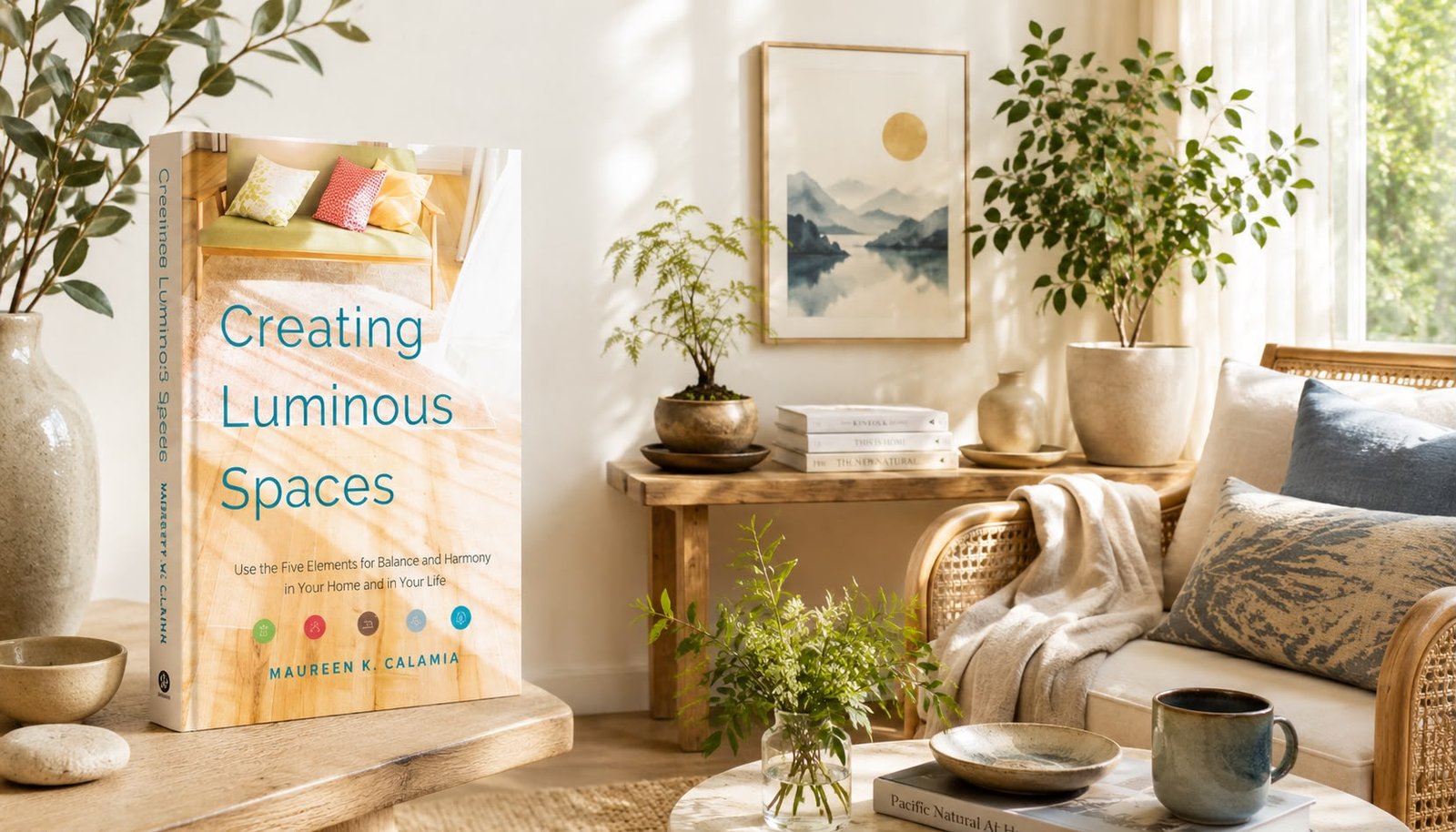
This Creating Luminous Spaces book review explores why Marueen Calamia’s approach to feng shui feels practical rather than prescriptive, while delving into Feng-Shui, biophilic design, colour psychology and the Five Elements personality system through the perspective of an artist and seasonal color analyst.
Feng Shui and Biophilic Design: Ancient Wisdom Meets Modern Research
The older I get, the more I appreciate the wisdom of Socrates’ adage to “know thyself.” Any book that offers insight or a fresh perspective into the sometimes seemingly unknowable mystery of ourselves is always a welcome addition to my library. However, when I picked up Creating Luminous Spaces, I wasn’t expecting it to become one of those books. I started reading it for decorating inspiration before we embarked on a move to a new home requiring major renovations; I finished it looking at color, space, my own home and even my own personality through an entirely new lens.
Why Creating Luminous Spaces Changed the Way I Think About Color
Color has fascinated me for as long as I can remember — from the mesmerizing names of the Crayola crayons to my work as an artist and my lifelong interest in seasonal color analysis, which I first discovered at the age of nine. It’s not every day I find a book that can offer a whole new look on a subject I’ve long been passionate about, but this one did. Creating Luminous Spaces gave me an entirely new perspective through which to think about color. It encouraged me to look beyond color itself, and even color psychology, and to consider the relationship between people and the spaces they inhabit from an energetic and metaphysical perspective.
Before reading Creating Luminous Spaces, I had always imagined my dream kitchen in a sumptuous cherry red, with warm coral tones in the living room. From a color psychology perspective, those choices made perfect sense: red is known to stimulate the appetite, while orange encourages warmth, conversation and connection.
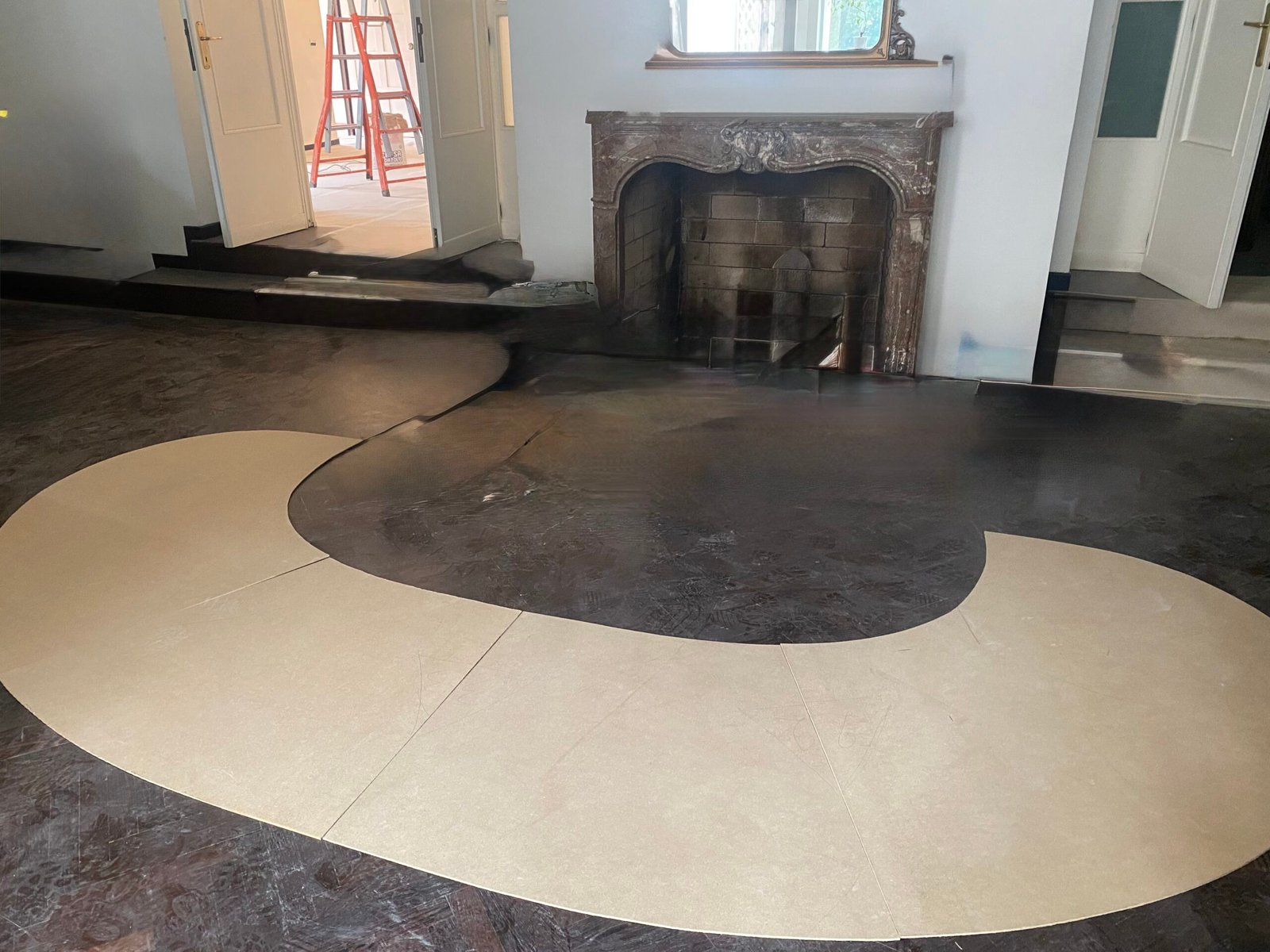
Then, four years ago, our family found our forever home, and suddenly that abstract vision became the reality of a design challenge that needed to be addressed. We had found the house of our dreams, but only because we used our imaginations to see beyond its current reality; after serving as offices for the past 40 years, it felt like anything other than a home. Extensive renovations were needed, from reclaiming floors covered by cheap vinyl to repainting walls coated in stark white industrial varnish. We also had to figure out how to integrate the furniture we already owned, much of it inherited and cherished, into the existing space.
The prospect was both exciting and daunting. In the months prior to the move, I went through a stack of home decorating and interior design manuals, and one of the online recommendations led me to Creating Luminous Spaces.
Feng Shui Meets Color Psychology
What I found inside wasn’t simply Feng Shui 101 or yet another decorating manual. Maureen Calamia certainly explains the basic principles of Feng Shui, but she also encourages readers to look beyond conventional color psychology and consider how a home’s palette could support the unique elemental balance of the people living there. In other words, the real gift of this book lies in showing us how our homes can become active participants in our wellbeing. Quoting Christopher Day, she reminds us that that “we don’t just look at our environments, we breathe them in” with all our senses, even our sixth sense. Calamia goes a step further, “when we breathe spaces in, they become part of us and who we are.”
Taking all this to heart, I started to question whether choosing colors based solely on their psychological effects was really the best approach. Following Calamia’s advice, I decided to take the What’s Your Element?assessment and to also meditate about the space and what colors would be best for our family in Feng Shui terms. Applying the results of the Element assessment, I realized that one thing that none of us were lacking in was stimulation, and that it might be more aligned with our elemental profiles to have a home that served more as a calming oasis than a fiery activator.
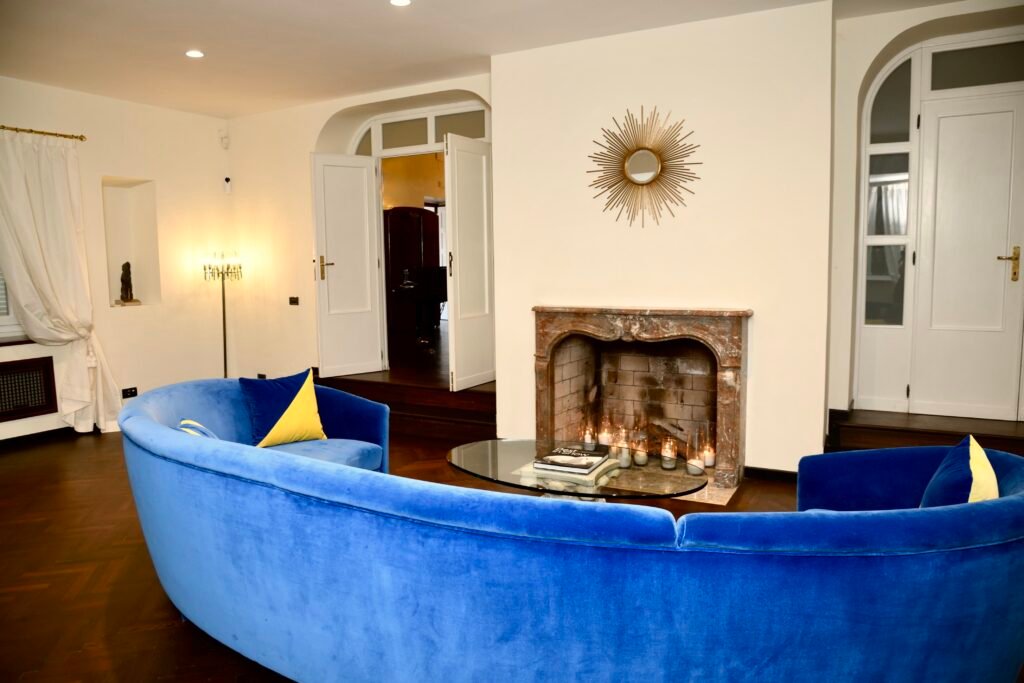
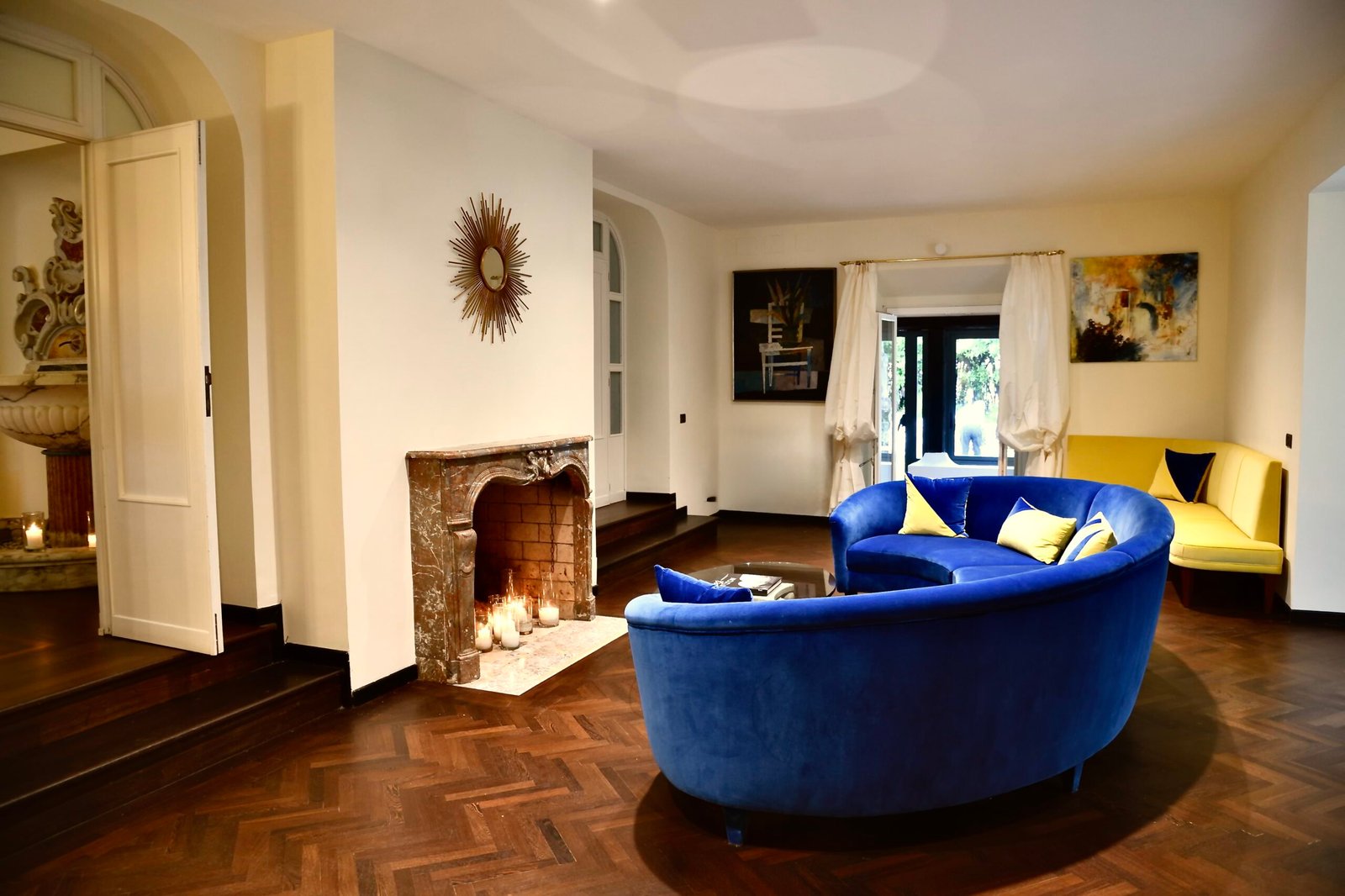
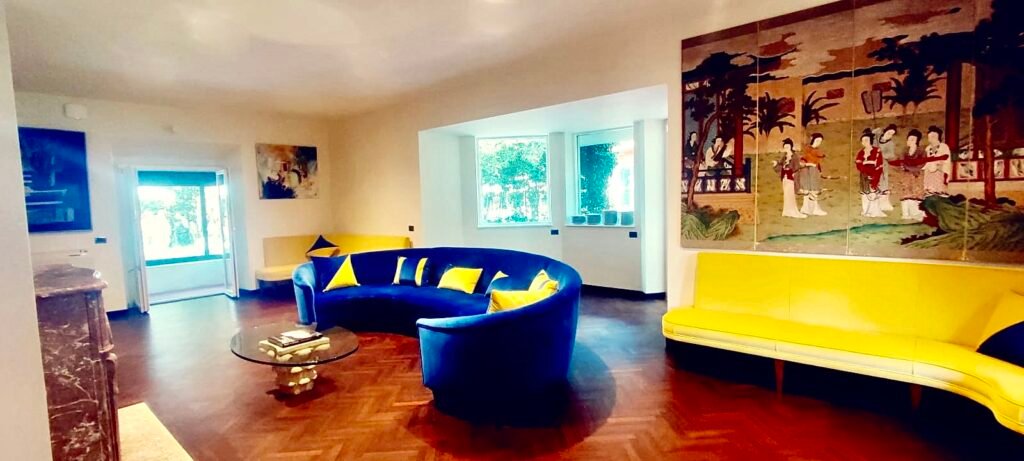
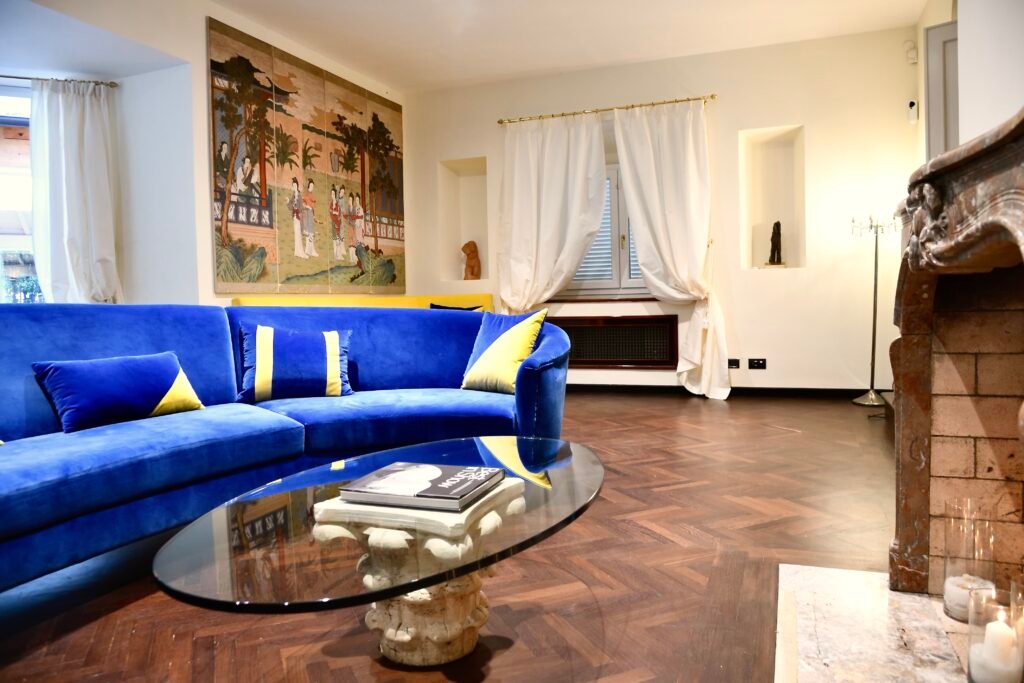
Instead of the reds and coral hues I had gravitated towards in the past, we chose a light blue kitchen that complemented the set of pale blue upholstered dining room chairs we already had inherited from a relative. We softened the glacial white walls to a soft white bearing the faintest hint of buttery yellow, so we warmed the space without diminishing its light and thereby also kept the light blue kitchen from feeling too cold. For our living room, adjacent to our kitchen and dining areas, we extended the same wall paint color but introduced a rich cobalt blue velvet for our sofa with accent pillows in saffron yellow. The palette remained harmonious and set a tone that carried over from room to room, yet it was varied enough to avoid monotony.
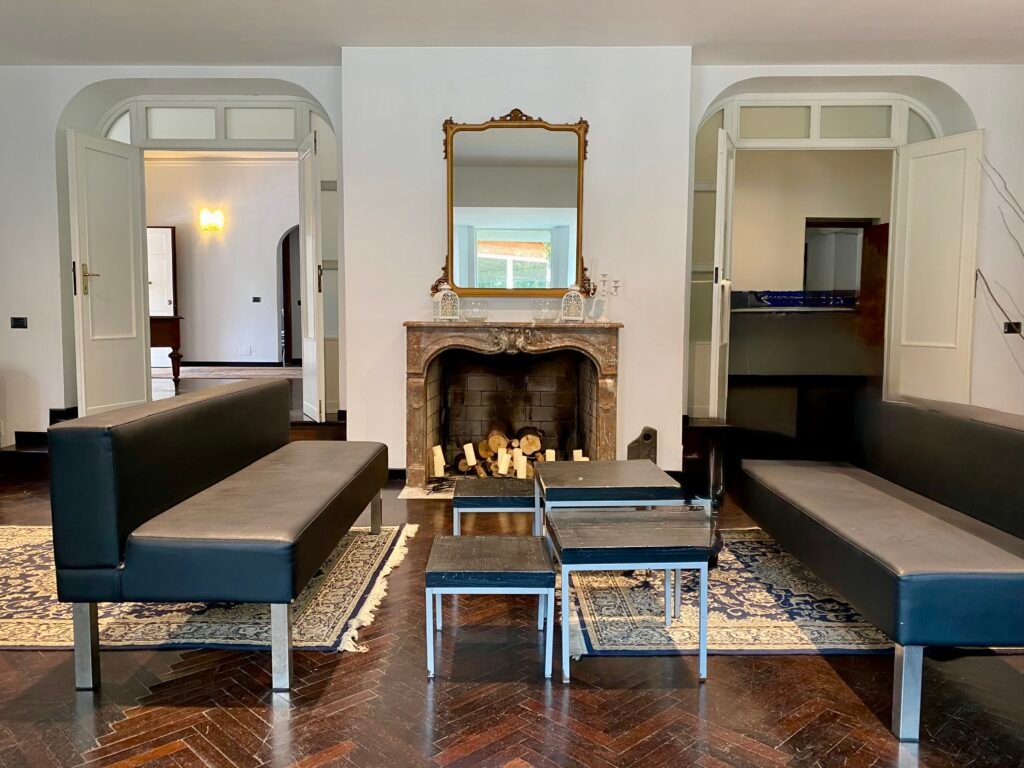
It wasn’t just about color, however. My brother-in-law had bequeathed us his magnificent pair of velvet hunting sofas. These exquisite sofas had always been my favorite pieces of furniture and had served as a focal point of our every previous living room, where they had always provided a wow factor. The living room seemed like the natural spot for them in this new house as well, but there was one problem: our living room was oddly shaped, with a long rectangular stretch and two entrances. Placing the sofas in the center in front of the natural focal point, the fireplace, meant that wherever we sat, our backs would always face a doorway.
Something about this arrangement made me feel uneasy, and my objection was not simply aesthetic. While I felt it was visually unappealing to walk into the room and see the back of the sofas, I also didn’t relish the idea of sitting in a sofa knowing that there was a doorway to my back. It felt like it would be impossible to relax while sitting there with an unseen entrance behind me. I had tried to explain that instinctive discomfort to my husband, convinced that it was not just a personal quirk and that everyone who sat in that arrangement would find it disconcerting, but I struggled to articulate why it mattered.
The Refuge Principle: Why Some Rooms Feel Instantly Comfortable
Luminous Spaces was the only book from my collection of interior design books that addressed that feeling of unease and explained what I was experiencing: the savannah and refuge principle. Calamia explains that from an evolutionary perspective, we have an innate preference for spaces where we feel both protected and able to survey our surroundings — a tendency rooted in our ancestors’ adaptation to the savannah.
Suddenly, my discomfort made perfect sense, and it was gratifying to hear that it was a universally acknowledged factor. More importantly, it gave me the language to explain it. We eventually commissioned a custom-made curved sofa that resembled a beautiful, elegant embrace with the fireplace at its heart. Those much-needed sinuous shapes softened a room dominated by long dimensions and right angles, and the new arrangement encouraged conversation and allowed everyone to enjoy the fireplace without feeling exposed. That single insight transformed not only the visual appeal of the room itself, but, more importantly, it changed the way we and our guests experienced it.
Chromophobia: Why So Many of Us Fear Color
The book’s insights weren’t limited to the way we arrange our homes. Calamia also explores our emotional relationship with color, and offers an explanation of chromophobia and the reasons many people fear color. Drawing on the work of professor of architecture Clare Cooper Marcus, she suggests that if our childhood home felt like a place of safety, we often try to recreate elements of it in our adult homes. As Calamia recounts, “All the walls of the common rooms in my childhood home were boring painter’s beige. The color was noncommittal, lacking self-expression, and bland, but no one could find fault with a beige room. I came to the realization that I carried a fear of color with me into my adult homes… when we first moved into my current house, it was freshly painted – you guessed it —painter’s beige. It felt safe. After a few years of living with those walls, I somehow got inspired to try some color in my pantry. I figured the pantry was a safe room to test, and I went with a bright blue and bright yellow (bold colors!). However, it looked so good it started a painting craze, and I redid one room at a time, bringing life and vitality to all of our common rooms.”
Her experience rsonated with me because it echoed questions I had been exploringfor years, while expanding them in unexpected directions. I already understood that color could shape the way we feel and the importance of color psychology. What Calamia offered was a broader perspective, one that placed color within a much larger conversation between ourselves, our homes and the natural world.
What is Biophilic Design?
Luminous Spaces was also my introduction into the fascinating field of biophilia, a discipline I knew nothing about despite its origins going back as far as the 1970’s. Coined by psychologist Erich Fromm and later developed by biologist E. O. Wilson and Yale Professor Stephen Kellert, biophilia is founded on the idea that human beings possess an innate connection with the natural world. Research suggests that incorporating natural light, plants, water, organic material and views of nature into our homes can reduce stress and improve wellbeing. Biophilic design emerged through the collaboration between experts in architecture, neuroscience, psychology, construction and environmental science, all working towards creating spaces that are more connected to nature. Until recently, biophilia has focused on public spaces and communal environments such as the hospitality sector or health care. But Calamia hopes that focus is changing along with the realization that that nature, with all its positive effects on our parasympathetic nervous system, is more important than ever, even as our homes are becoming increasingly ever more detached from nature. Both Feng Shui and biophilia in essence teach us “how to bring the outdoors in”.
While Feng Shui developed thousands of years ago as a way of creating harmony between people and their surroundings, biophilia approaches a similar goal through modern research into our relationship with the natural world. Biophilia is a much more recent field but Calamia accords it equal status with feng shui, explaining that it is in effect an extension of feng shui principles “Biophilic design, is in many ways akin to feng shui. The goal of each discipline is to create a space that will enhance well-being for its inhabitant through a greater connection to nature.”
However, as Calamia states “How each discipline approached the end goal couldn’t be more different. Biophilic design incorporates a series of well-documented and research-based guidelines for architects and designers. Feng shui provides a philosophy of life that was created from observing the natural world thousands of years ago. One is tangible and finite, the other is often intangible and intuitive. I like to say biophilic design Is the yang and feng shui is the yin.” Rather than presenting them as competing philosophies, Calamia demonstrates how each discipline complements the other, giving readers the benefit of both.
She gives the example that biophilic design principles would dictate the use of natural materials like wood and brick, the colors of nature, as well as fresh air and natural light, whereas “Feng shui speaks to a deeper layer of nature that is communicated through an esoteric language of yin and yang and the five transformations of energy… I will incorporate aspects of both feng shui and biophilic design and present a merged, synergistic view.” Her approach offers a synthesis between the evidence-based architectural and environmental design principles of biophilia and the feng shui symbolic and intuitive framework to understand the relationship between people and place, and this synthesis one of the book’s most original and valuable contributions.
Beyond its philosophical framework, Creating Luminous Spaces is full of practical design advice. Calamia explores everything from the psychological and physiological effects of natural and layered lighting to the use of natural materials, organic forms and meaningful artwork. She explains why curves often feel more welcoming than sharp angles, why clutter drains our energy, and why creating spaces that offer both prospect and refuge can profoundly influence how we feel in a room. Whether readers embrace feng shui in its entirety or simply appreciate good design principles, Calamia’s suggestions are both accessible and applicable.
The Five Elements Personality System Explained
Once she has established the dialogue between modern research and ancient wisdom, Calamia introduces the system that underpins the remainder of the book: the Five Elements. Drawing inspiration from Jung’s theory of universal archetypes and the work of acupuncturists Efrem Korngold and Harriet Benfield, she develops their association of each Feng Shui element with a distinctive personality archetype: Water is the Philosopher, Wood is the Pioneer, Fire the Wizard, Earth the Peacemaker and Metal is the Alchemist. She devotes a chapter to each archetype, describing both their defining characteristics as well as their strengths, challenges and the kind of environments in which they flourish.
Calamia employs them to great effect, explaining in both poetic and practical terms the defining characteristics, as well as the strengths and weaknesses of each. A thoughtful and comprehensive What is Your True Nature? assessment makes up the culmination of the book (also available online), supported by meditations, visualizations and practical exercises. Particularly helpful are the sections on clutter, and how it manifests differently within each elemental type (the only ones immune to it are the Metals). There are also indispensable and extensive reference charts summarizing colors, materials, patterns, shapes and imagery associated with each element, allowing readers to adapt the principles to their own homes and personal needs.
I appreciated that Calamia structures the book in a way that encourages readers to leave the assessment until the end. If the assessment hadn’t been at the final section, I would have tried to identify my element from the outset. Instead, I was able to read through the chapters dedicated to each element, enjoying her poetic descriptions and allowing the ideas to percolate and giving me time to recognize what genuinely resonated.
Why the Five Element Relationships Matter In Everyday Life
One aspect I found most engaging was Calamia’s explanation of how the Five Elements interact with one another. Rather than existing as isolated personality types, they form a dynamic system of relationships. The parent element nourishes and strengthens the next; the child receives that energy and, if overexpressed, can gradually drain its parent; while the grandparent serves as a regulating influence, preventing any one element from becoming excessive. Understanding these relationships transforms the Five Elements from a series of personality archetypes into a genuinely practical framework for restoring balance, helping readers identify not only which qualities to cultivate but also which may need tempering within themselves and their homes. This section is helpful for learning not just what to introduce into your space, but also what to avoid!
For example, someone with a dominant Water nature may be naturally reflective, intuitive and a good listener, but they can become depleted if they spend too much time nurturing the growth of others or constantly taking on new responsibilities. Rather than simply surrounding themselves with more Water energy, Calamia explains that balance comes from understanding the relationships between the elements. Metal nourishes Water, so a Water personality might benefit from introducing more Metal qualities into their home through uncluttered spaces, rounded forms and lighter tones. At the same time, they may need to be mindful of an excess of Wood energy, which Water naturally feeds, particularly during periods when they already feel emotionally or physically drained. If this sounds complicated, fear not, as charts are included to help keep it manageable.
Speaking of parents, one of the book’s more thought-provoking observations concerns the roles of Earth energy in caregiving. In her work with clients, Calamia observes that caregiving roles –particularly motherhood –often require an abundance of Earth qualities such as nurturing, patience and selflessness. Without healthy boundaries or opportunities to replenish themselves, these qualities can become depleted, leaving caregivers emotionally and physically exhausted.
One of the book’s greatest strengths is the collection of case studies sprinkled throughout. Those real-life and relatable scenarios bring the theory to life and make the elemental archetypes feel recognizable rather than abstract. I found them especially helpful when interpreting the assessment, because our dominant element isn’t always immediately obvious. While everyone has one primary element (or at the most 2 elements), all 5 elements are present in varying degrees. Family roles, life experiences, and societal expectations can all influence how our elemental qualities are expressed. Calamia’s thorough assessment was especially valuable because it doesn’t simply identify your dominant element; it also gives you a clearer sense of the proportion in which each element is expressed.
One of the book’s most moving moments is Calamia’s reflection on how the death of her father when she was just eleven strengthened the more introspective Water qualities alongside her innate Fire and Wood nature. It beautifully illustrates one of the book’s central ideas: while we are born with certain elemental tendencies, our life experiences can shape how they are expressed. I loved how she showed that the spiritual traits of the Water proved to be an important aspect of her career choice, and it was informative and amusing to read about how her own professional experiences as a strong Wood type when it came to dealing with multitasking, proofreading — and dealing with other Woods
How Creating Luminous Spaces Influenced My Home
Calamia herself stresses that feng shui “is meant to give you tools, not rules.” This book is full of them, from the Luminosity Measure chart you can use to gauge your own home’s energetic balance, to various meditations and case studies and online support. I found myself returning to its teachings several times over the past few years and, before writing this review, I reread it once again. Each time I discovered something new.
More than anything, Creating Luminous Spaces reminded me that understanding ourselves is an ongoing process, and our homes often become mirrors of our inner world and energetic state. But that mirroring relationship works both ways. Just as our inner world is reflected in our homes, our homes can also influence our wellbeing. It is an invaluable guide for anyone seeking to create a beautiful home that also nurtures the people who live in it. As another sage, Rumi, wrote “Don’t you know yet? It’s your light that lights the world.”
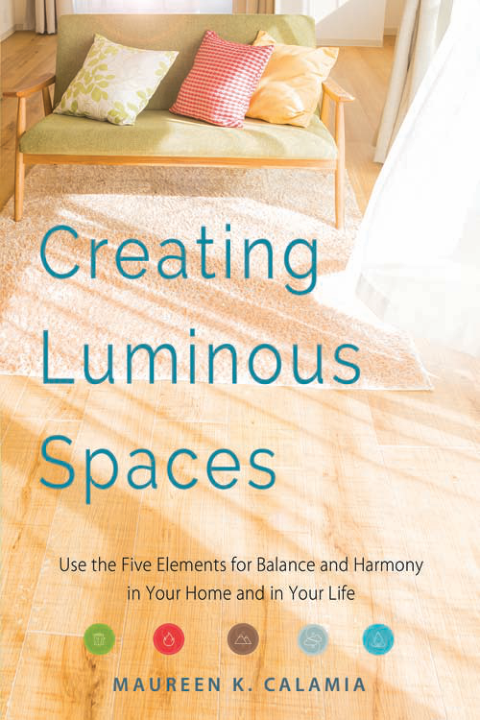
Interested in reading Creating Luminous Spaces for yourself? Please consider using this affiilatelink, it doesn’t cost you anything extra and it helps support the ColourAddict Book of the Month. Read or purchase the book here https://geni.us/jwaofV0
To learn more about Maureen Calamia and to access her additional support online including guided mediations, online assessments, courses and other resources that complement Creating Luminous Spaces, Visit https://www.luminous-spaces.com