How empathy, instinct and design help her read spaces, understand people and transform the way homes are sold
Photo: Fabrizio Vinti
Sanja Radovanovic is formidable. Tall, athletic and striking, she reminds me of a beautiful deity, and Athena would seem to be the natural fit because of the strength and intelligence she projects. Or perhaps an Amazonian queen, a wonder woman warrior striding through life.

Photo: Fabrizio Vinti
I first saw Sanja at work during a presentation she gave at a professional women’s association. Hearing about the logistics involved in home staging, from storing enough furniture to furnish dozens of homes to organizing photoshoots on the same day she as the staging, all while sometimes dealing with tenants still occupying the space, made me feel tired just listening! I started to admire her notable organization skills in addition to her obvious sense of aesthetics.
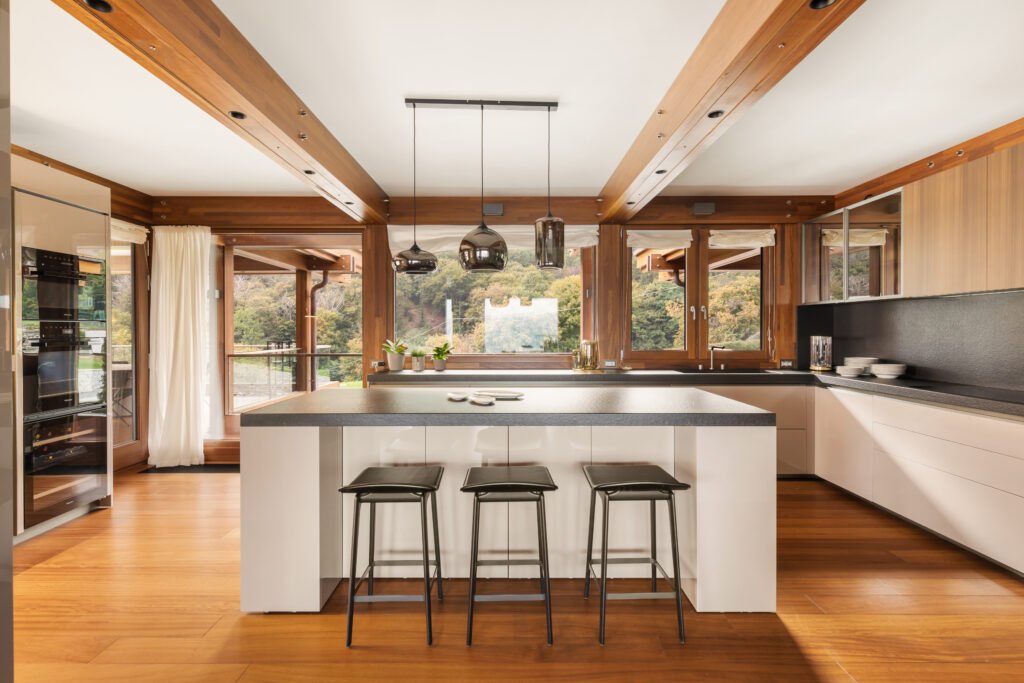
Photo: Edi Solari
While her competency and passion for her job were not a surprise, what was a delightful discovery was her sense of humor and her willingness to include herself as part of the joke. At one point during her presentation, after showing us a photo of her usual impeccably groomed professional self, she contrasted it with a photo of herself in a deliberately slouchy mismatched lounge set. Her point was that we would never choose to present ourselves unprofessionally at work if we wanted to make a good impression, so why would we present our homes that way when trying to sell them?
That good natured self-deprecation was still present when I interviewed her, but another surprise awaited me: underneath that impressive, almost daunting exterior is a deeply spiritual, sensitive and more vulnerable woman than I had expected. The Sanja I knew speaks perfect English and Italian in addition to her own native Serbian, but I had no idea of the backstory. She arrived in Italy at fifteen, barely able to count to five in Italian and was immediately thrown into the rigors of the famously demanding Italian high school system. A few tears were wiped away when she recounted the experience of her 15-year-old self, but that humility and vulnerability only made her all the more charming and impressive to me.
Hearing about her life, how she was brave enough to marry at 19 and move to Libya and then Oman while starting a family, how she learned Arabic and embraced throwing herself in at the deep end when it came to home staging made me understand her and her work in a different way. Home staging is not only about color, furniture, or making a property look better. Sanja often enters people’s homes when they are at their most vulnerable; aside from the considerable stress any move entails, they may be moving due to a divorce or a death and she has to navigate their grief and expectations in a delicate balance with sorting out clutter and beautifying spaces that are still being lived in.
Learning about her life helped me appreciate even more how her astute grasp of psychology, empathy and relatability make her the perfect person to venture into her clients’ most intimate personal spaces, helping them through delicate life transitions while also maximizing the value of what is often their biggest asset.
Her professional résumé is as formidable as she seems. After studying interior design in San Francisco, she began her home-staging career in Chicago in 2013 and went on to achieve the highest level of professional accreditation in home staging and then became a certified trainer herself. When she returned to Rome, she didn’t simply bring home staging with her, she became one of the pioneers of home staging in Europe.
Today, she is Co-Founder and President of GAPHS (Global Association of Professional Home Stagers), the organization that grew out of the European association that she helped establish. She is also Co-Founder and Creative Director of MARI Team Immobiliare in Rome, where home staging is not treated as an optional extra but built into the way properties are brought to market. Along the way, she has also co-founded a furniture rental company, trained other home stagers, and brought her charisma and communication skills to radio and television in addition to becoming a regular speaker at international real-estate and home-staging conferences.
All of these accomplishments were made after spending much of her early adult life raising two daughters across 4 continents and 4 different countries. Wonder woman indeed!
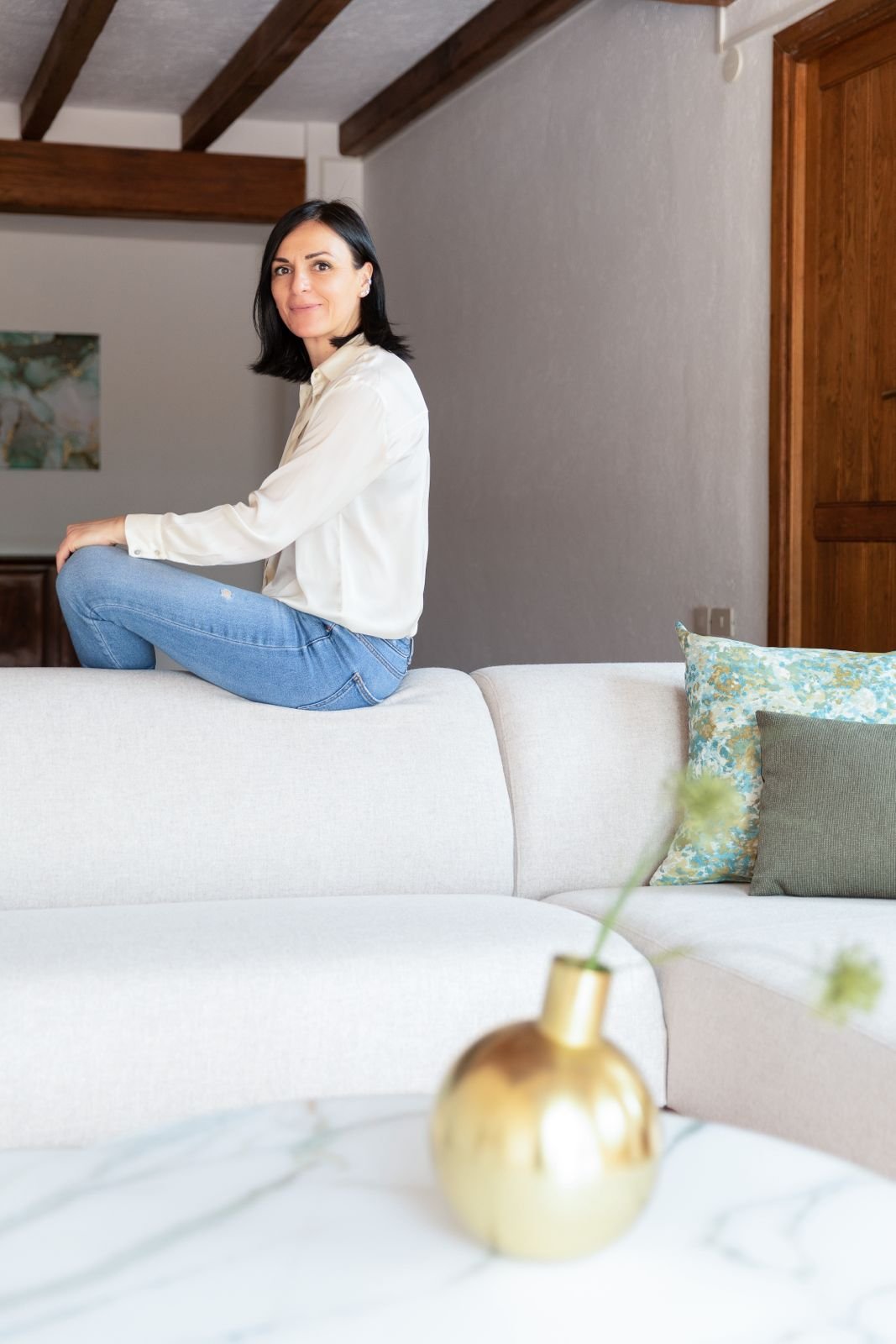
Photo: Fabrizio Vinti
From a Teenage Immigrant to Europe’s Home Staging Pioneer
You moved to Rome when you were fifteen. What was that experience like?
I ended up in Rome because my mum had a friend who already lived here. At the time we were living in London, and one day her friend said, “Why don’t you come to Rome? It’s sunny, the people are wonderful, the school system is great, and I think it would be very productive for the girls to live in a different country.”
So, my mum made the decision for the three of us. I wasn’t very keen on moving to another country and having to learn another language.
You were only fifteen, right? And you had to start Italian –and Italian school from –scratch?
Yes. I remember landing at Ciampino Airport and my mum saying, “Aren’t you happy to be here?” And I burst into tears.
I said, “Do you understand how difficult this is going to be? I have to start completely from scratch just because of the language.”
She answered with something that I think is hilarious nowasays and as an adult, because I would never have said something like that to my own kids. She said, “You already know how to count to five. One, two, three, four, five. The rest will come.”
It was horrible… It was extremely hard at the beginning.
You had to start Italian school immediately?
Yes. It was a tourism and languages high school. The funny thing was that I excelled in English, obviously, and also in German because I’d studied German in Serbia before moving to London.
Then came Italian class. The teachers would ask me to read aloud. Every word was so complex to pronounce, and the other students would start laughing. It hurt so much from day one.
I still remember my first written assignment. I got what was essentially a zero. Looking back now, I still think about that teacher and wonder, why would you do that? Why wouldn’t you take into consideration that the person sitting in front of you was already going through a challenging moment? Instead of making it even harder, you could have encouraged that student and helped her go from zero to something much better in a shorter amount of time.
That must have been devastating at fifteen, when you just want everyone’s approval and want to fit in.
Absolutely. And I think that’s why nowadays I really love encouraging people and helping them move through different situations. I’, an extremely caring person because I want to give what I didn’t receive at that time.
Another thing that really helped me with the language was reading books. That enriched my vocabulary more than anything else.
For almost ten years now, people have told me, “Your Italian vocabulary is richer than that of many native speakers.” I see myself as Italian now, and I’m proud of that. Through books, you learn so much, especially in Italian because there are so many different ways of saying the same thing.
At that age you desperately want everyone’s approval. You just want to fit in. Instead, people are laughing because you can’t pronounce words correctly. It’s a completely different alphabet, a completely different language.
You finished high school in a language you didn’t even speak when you arrived. That alone is quite an achievement.
Yes. And nobody ever asks what grades you got. No one cares!
Then you met your husband when you were still very young?
I met my husband when I was nineteen. We met in Nettuno, this extremely cute seaside town south of Rome. Shortly after we met, we decided to follow our dreams, go and live together, and then we moved to Libya.
To Africa? How old were you then?
I was about three months away from turning twenty.
So almost immediately after meeting him, you decided to move to another continent together?
Yes. It was something I felt insdie myself, that gut feeling that I had to take this decision. It wasn’t Cupid at all.
And I strongly believe that one of the reasons we are still so strong today is that it wan’t all about attraction from the beginning. When you build a strong and healthy mental relationship, it goes much deeper.
You were both very adventurous.
Yes, and I believe that’s one of the reasons our marriage is still so strong today…Of course, you have to work at a marriage because life is compromise; perfection doesn’t exist.Some days you’ll have to give one hundred percent, other days your partner will.In fact, I’ve realized that one hundred percent is actually only half — a relationship is two hundred percent: One hundred from you, one hundred from me. If one person can’t give their one hundred, the other steps in—not forever, but when life requires it. That’s how it works and that’s where I think a lot of people struggle, understanding when they have to pitch in, be there and listen.
So you both moved to Libya. What did you do there?
I became a stay-at-home mum and My husband worked for the Italian Embassy. Our first daughter was actually born in Italy because, with my first pregnancy, I wasn’t confident enough to give birth in Libya. I flew back to Italy for the delivery.
By the second child, I trusted the process much more. I thought, “They deliver thousands of babies every day. Why not?” And it turned out to be a wonderful experience.
From Libya and Oman to Chicago: A Life Across Continents
After Libya, where did life take you?
We remained there until 2003, then we returned to Rome for three years. In 2006, another work assignment came, and we moved to the Sultanate of Oman.
What was that experience like?
It was incredible! That’s where my daughters started asking me, “Mum, how many homes do we have? Where is our home?”
And I always answered the same way: Home is wherever we are happy together. It doesn’t matter what continent we’re on, what country we’re in, whether the house is big or small, one floor or three. Home is where we happily live. I think all those countries and experiences shaped all of us.
It sounds as if you really wanted to immerse yourself in each culture rather than simply live there?
Absolutely. Whenever we moved somewhere new, I wanted to learn about and engage with the local culture, customs and traditions. I wanted to become part of the country rather than simply live there.
That’s when you learned Arabic?
I’d actually started learning Arabic while we were in Libya. Arabic is fascinating because there’s Classical Arabic, and then every region has its own dialect. North Africa is very different from the Gulf countries. The further east you go, the more Classical Arabic comes into everyday life. So yes, I learned Arabic and continued studying it in Oman.
That must have given you such a different perspective.
It really did…Living through Ramadan, respecting the traditions and customs—it all became part of our lives. Oman is probably the most respectful country toward foreigners that I’ve ever experienced.
You receive respect, and you naturally want to give it back. For example, during Ramadan, even in the middle of summer when temperatures were extremely high, I deliberately chose not to wear tank tops or show my legs. Nobody imposed anything on me, it was simply my way of respecting the people who had welcomed us into their country.
Those were great years, great experiences.
From Oman to Chicago: A Complete Culture Shock
Then came quite a culture shock?
A huge one! In 2011 we moved to Chicago. Imagine going from countries where we owned nothing but flip-flops and swimsuits …to Chicago. Autumn arrived, and my daughters didn’t even own sweaters!
Chicago gets extremely cold. We had come from places where the plastic goggles I left beside the swimming pool would melt in the sun and now, we were somewhere that reached minus thirty degrees and anything we left outside would freeze.
How Real Estate First Caught her Attention
Was Chicago where your interest in real estate began?
Yes. That’s where I started discovering real estate, although the passion had started a little earlier, in Dubai. During the financial crash in 2008, because Dubai was so close to Muscat, where we were living in Oman, we used to go there regularly for shopping and entertainment.
Whenever we went, I started visiting properties. The crash created incredible investment opportunities — unfortunately, at the time we didn’t fully understand what those opportunities represented. But that was when I became fascinated by real estate. I started reading articles, studying markets, learning about investing. I’ve always had an interest in stock exchange market too.
Then, in the United States, it was the perfect combination of access to information and easy access to properties because of open houses.
So you started going to open houses?
Exactly. The United States made everything so accessible –you could simply go to open houses. That completely changed everything for me: I would spend weekends visiting property after property, I’d ask endless questions. “Why is this room empty? Is this a bedroom? Would the nightstands I like even fit in here? “I would look at finishes and think that they clashed or weren’t’ harmonious. I would look at hardwood floors and think that I would have polished them before putting the property on the market.
Were you always such a visual person?
Always. Absolutely.
How Sanja Discovered Home Staging
Was it at one of those open houses that the moment someone first mentioned home staging?
Yes. I remember speaking to a real estate agent and saying, “The value of this house would be so much easier for buyers to understand if it weren’t empty.”
She looked at me and said, “Oh… you must be a home stager.”
I had absolutely no idea what she meant and was embarrassed to ask, “What’s a home stager?”
I ran back home and started Googling it. The more I read, and the more I dug into ti, the more fascinated I became with the discipline. I couldn’t believe there was an entire profession built around something that felt so natural to me!
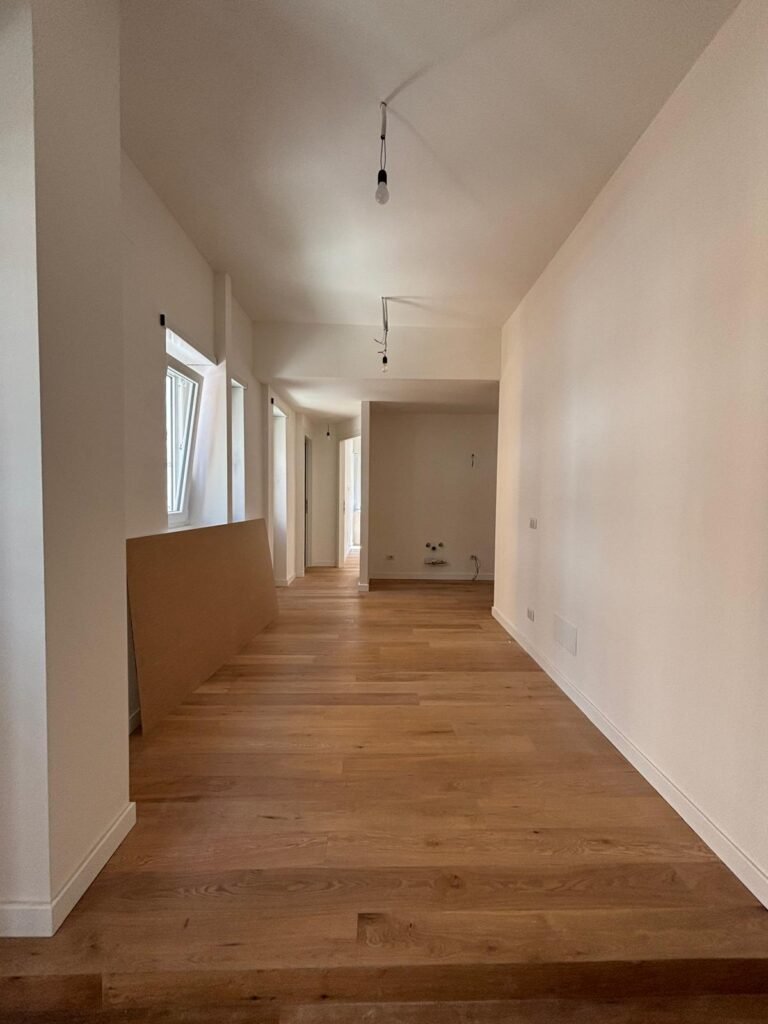
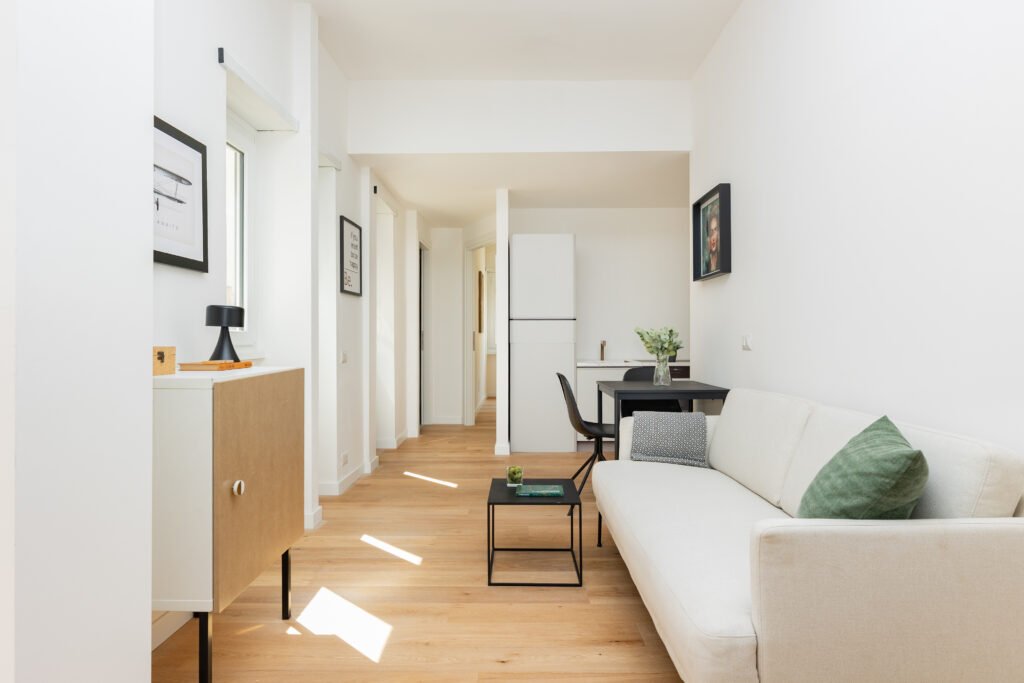
Before After, Photo : Fabrizio Vinti
Had you already studied interior design?
Not yet. That actually came shortly afterwards.
So how did interior design enter the picture?
I have to go back a little. When my husband and I decided to have children, he told me something that stayed with me forever. He said, “Children never ask to be brought into this world. If we’re going to have them, I want them to have their mother.”
He asked me whether I was willing to dedicate a certain amount of time to them, until they were almost in high school, so that I could be with them, bring them to school and be there for their after-school activities. And I said “absolutely!”
That’s quite an unusual conversation to have at twenty.
It was. At twenty, you’re still discovering who you are. What’s wrong with not going to work straight awaty? Why does a woman necessarily need to start a career at twenty?
Having children young has allowed me to enjoy my forties in the best way possible, and I’m enjoying that enormously. My daughters are my best friends, they come to me when they have something to share or need advice, and they genuinely enjoy spending time with me. Sometimes the three of us go away together. Other times I spend one-on-one time with each of them because the dynamics change depending on who is there.
For fifteen or eighteen years my entire life revolved around my daughters’ needs. Then,
one day they no longer needed me in quite the same way., I discovered that I existed too.
And I realized: Now it’s my turn. That’s when home staging found me. Or perhaps, that’s when I finally found home staging!
So you had just discovered home staging. What happened next?
It was one of those moments in life that completely changes your direction: I had found a home staging training company and was just about to enroll in the course, I had already made the phone calls and was ready to begin. Then something unexpected happened.
What happened?
The real estate agent who had sold us our house in Chicago came to see me. She had watched us renovate our own home. She’d seen the choices I’d made; she knew the way I looked at spaces.
One day she knocked on my door and said, “I need to talk to you about business.” I had no idea what she meant. She sat down and said, “You have a talent. I’ve seen what you’ve done with your own home. My home stager has just moved out of state, would you like to work with me?”
I couldn’t believe what I was hearing. I had literally just discovered the profession –I hadn’t even completed the training yet!
You were thrown into your very first staging project before you’d even taken the course?
Exactly. She started bringing me to occupied homes that were about to go on the market. She included staging consultations as part of every listing she acquired. And there I was…walking into people’s homes, giving them advice. Without any formal training yet.
Weren’t you terrified?
Surprisingly…No! It felt completely natural from the very first day. Of course, my interior design studies helped enormously, but everything simply clicked: it felt like I had found exactly what I was meant to do.
Looking back now, what did being thrown in at the deep end teach you?
Probably the biggest lesson of my career. At that point in my life I was someone who analyzed everything. I wanted the perfect moment, the perfect warehouse, the perfect certificate, the perfect preparation. I wanted to feel completely ready before beginning.
Instead, life threw me straight into it. And I’ve realized that sometimes the best thing you can do is jump off the cliff. Because once you’ve jumped, there is no hesitation anymore. You simply have to do it. If I had waited until everything was perfect, I probably would have questioned myself constantly: Am I good enough? Am I doing this correctly? Am I following exactly what they taught me?
Instead, because I simply had to do it, I developed confidence from the very beginning.
What is Home Staging and How is it Different from Interior Design?
For readers who may not know, what exactly is home staging?
If you ask me for the definition, I always say the same thing: Home staging is a marketing strategy. It’s also a communication strategy. Practically speaking, it’s the preparation and enhancement of a property before it goes on the market.
But the important part is that every project is tailored. You prepare and enhance that particular property, for that particular target buyer.
Everything depends on the property itself: its condition, its architecture, its natural light, its energy, its location, its price point. Everything.
How is that different from interior design?
They’re actually very different disciplines. When you’re designing someone’s home, you’re creating a space specifically for that person. Everything revolves around their taste, their lifestyle, their needs, their budget. If I’m choosing colors during an interior design project, I’ll ask the client what colors they love. Maybe they’ll say yellow, maybe they’ll want a dark red bedroom. Sometimes I’ll explain that I wouldn’t recommend certain colors because color psychology tells us they may not create the atmosphere they’re hoping for.
So interior design is very personal; home staging isn’t. With staging, the client isn’t the homeowner, the client is the future buyer. Everything changes because of that. When you do home-staging projects, sometimes you don’t do things according to your own taste because you’re working with a specific target buyer.
So, who are you really designing for?
For the target buyer. Every property has one. I narrow it down according to demographics, lifestyle and economics. For example, a fully renovated three-bedroom apartment will most likely be purchased by somebody under forty. Perhaps a young professional. Perhaps a newly married couple thinking about having children…Maybe today the third bedroom is a study or a home office, and tomorrow it becomes a nursery. That’s how we think.
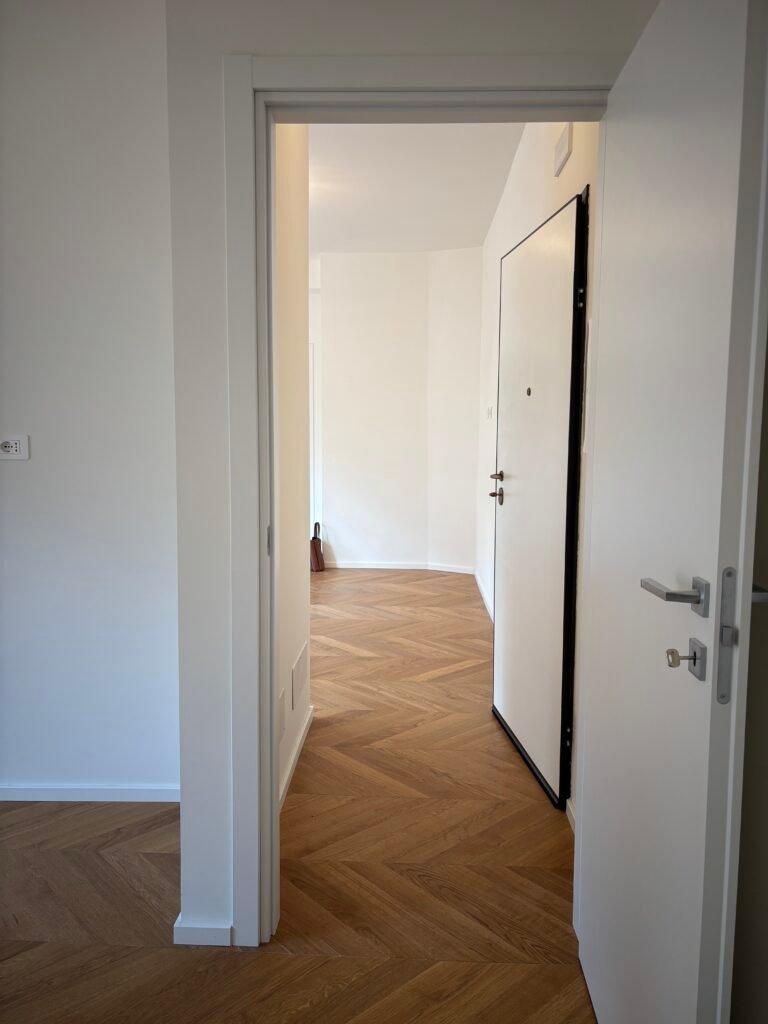
Before
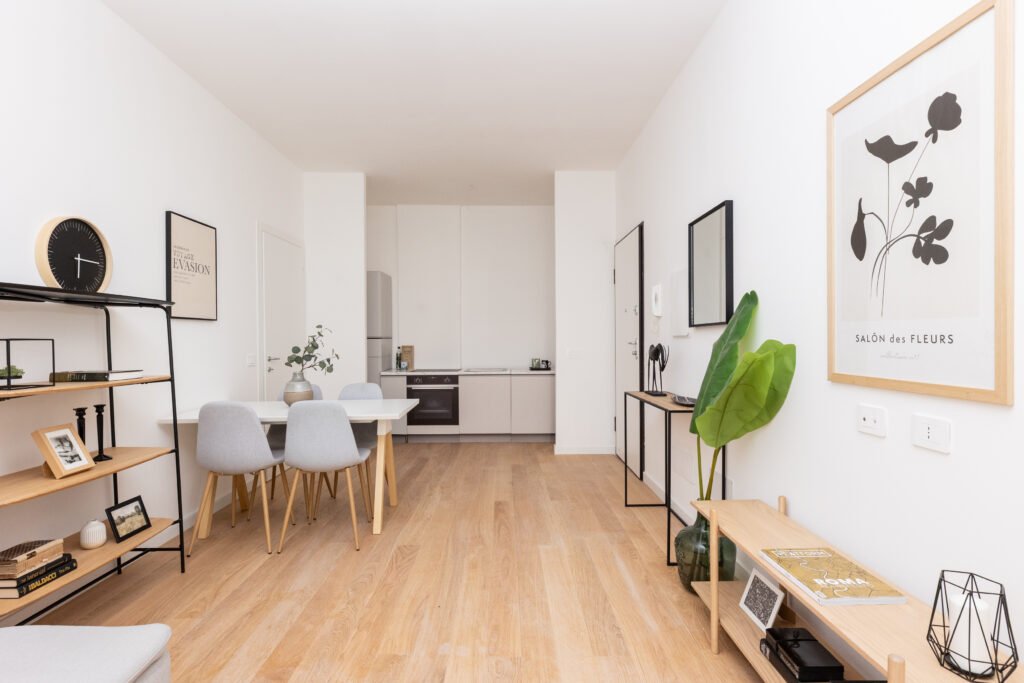
After, Photo: Fabrizio Vinti
And I imagine price changes everything.
Completely. A two-million-euro apartment in central Rome needs to be staged very differently from an apartment on the outskirts of the city. The higher the price, the higher the expectations.
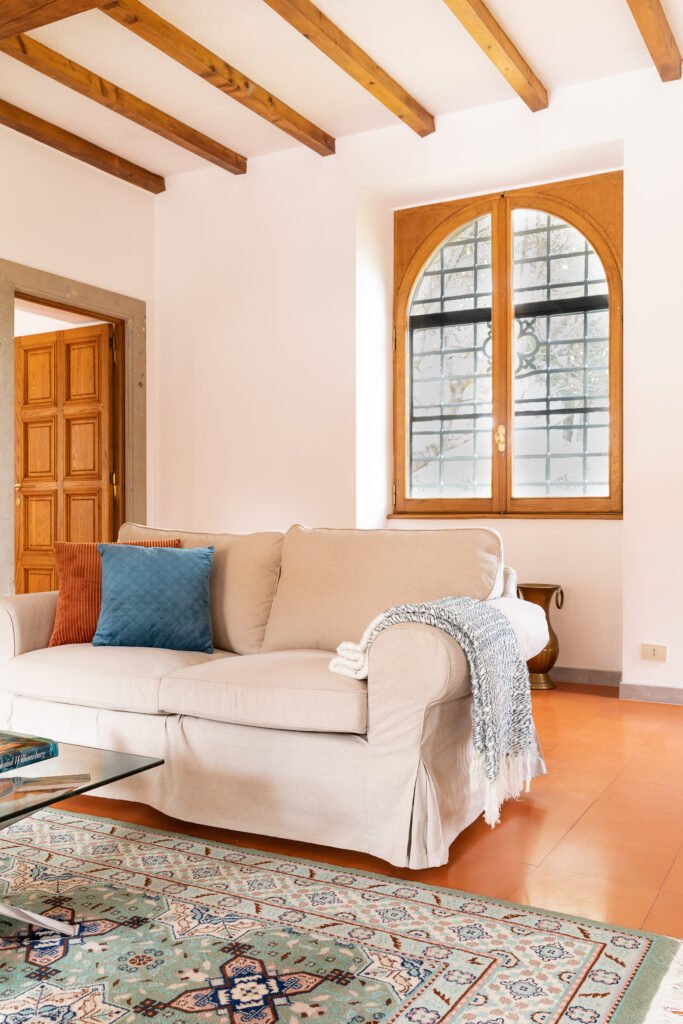
Photo: Fabrizio Vinti
You cannot furnish a luxury property with inexpensive furniture –the contrast is simply too obvious. The buyer immediately notices.
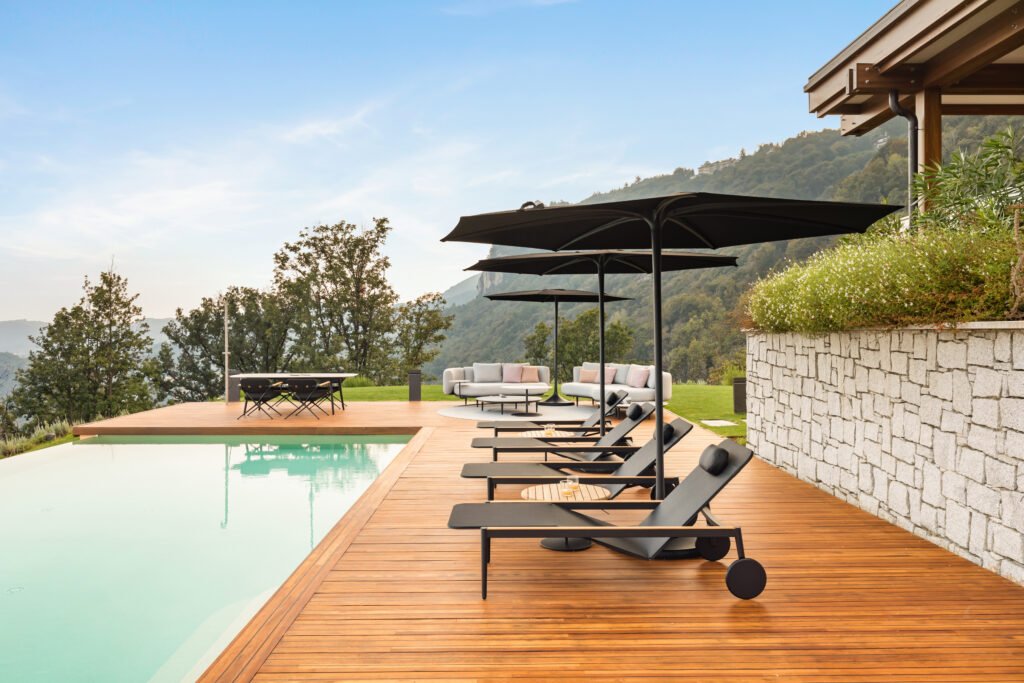
Photo: Edi Solari
Is it true that you have enough furniture in your warehouse for around forty-five homes?
Yes. Around seventy-five to eighty-five percent of it is for traditional properties; the remaining pieces are for luxury homes.
The difference between staging a €150,000 apartment and a €2 million apartment is enormous.
Luxury buyers are incredibly demanding. Everything has to feel right. Everything has to reflect the lifestyle they’re buying into.
It sounds like you don’t just stage a property, you’re staging a future life?
Exactly. That’s exactly what we’re doing. We’re helping people imagine themselves already living there. And that’s where the psychology begins.
Color Psychology in Home Staging
Color clearly plays a huge role in what you do. How much does color psychology influence your staging decisions?
A great deal! When we’re staging luxury properties, that’s really the only time we begin to segment colors more deliberately, because certain colors create very specific perceptions.
Think about royal blue: immediately it communicates prestige and elegance. Or burgundy: it evokes richness and sophistication.
But it’s not only about color. It’s also about texture, it’s about the quality of the materials, it’s about whether those colors are combined with metals. It’s about craftsmanship.
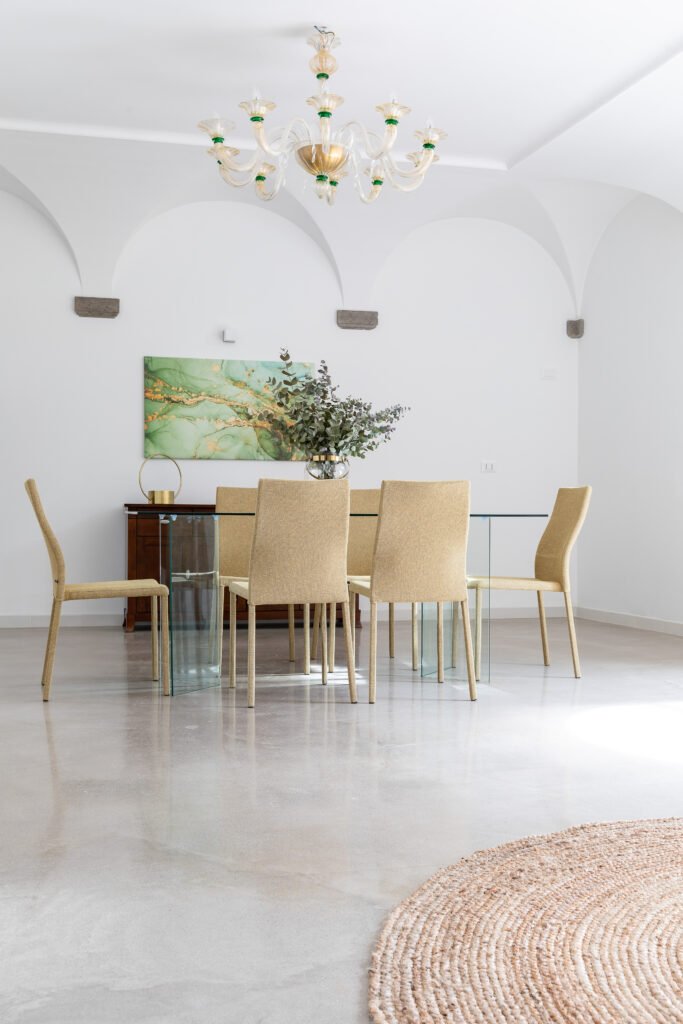
Photo: Fabrizio Vinti
So quality is something that people pick up on even if they can’t necessarily explain why?
Yes. Nowadays almost everything can be copied; you can imitate expensive furniture, expensive fabrics, expensive finishes. But people can tell. Maybe they don’t know exactly why, but they feel it. Even just from photographs! And certainly, in person.
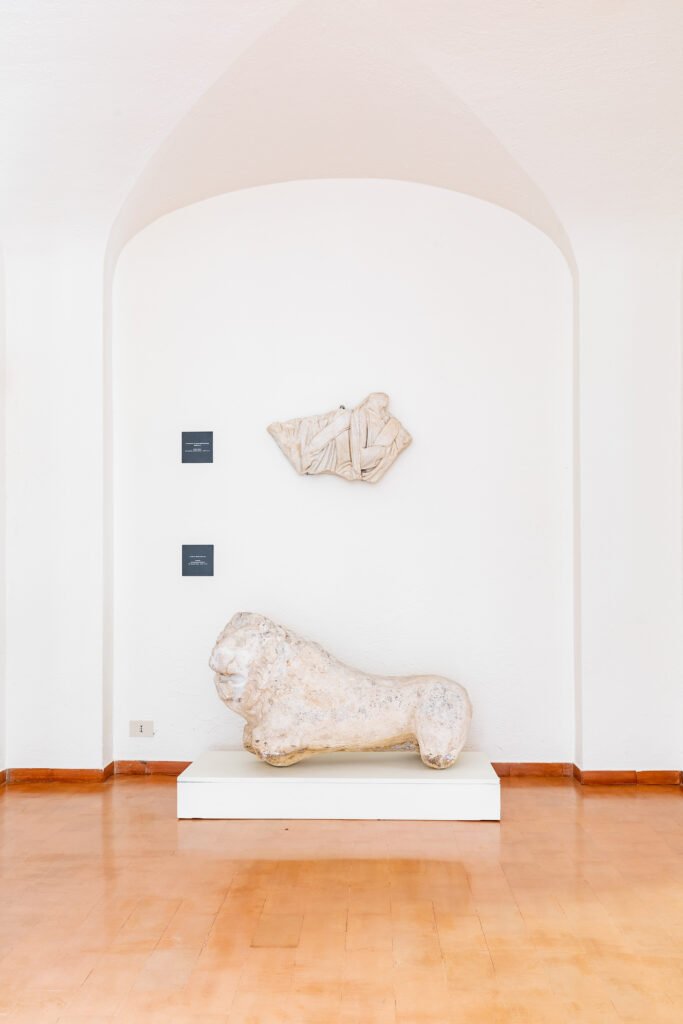
Photo: Fabrizio Vinti
Do you follow design trends?
No. We don’t follow trends. Everything needs to be as natural and timeless as possible. That’s the only way to appeal to the widest range of buyers within that specific buyer segment.
When everything is very neutral, it’s easier to obtain a harmonious balance. harmony. Very often that means whites, beiges and soft greys, then carefully introducing accent colors.
Personally, I also follow the 60-30-10 principle.
The 60-30-10 Color Principle
Can you explain that principle for those who may not already be familiar with it?
Certainly. Around sixty percent is your dominant color. In many renovated properties that’s already determined for us because the walls and ceilings are white.
Another thirty percent often comes from the flooring, which is usually a warm beige or natural wood. Sometimes that can become visually boring.
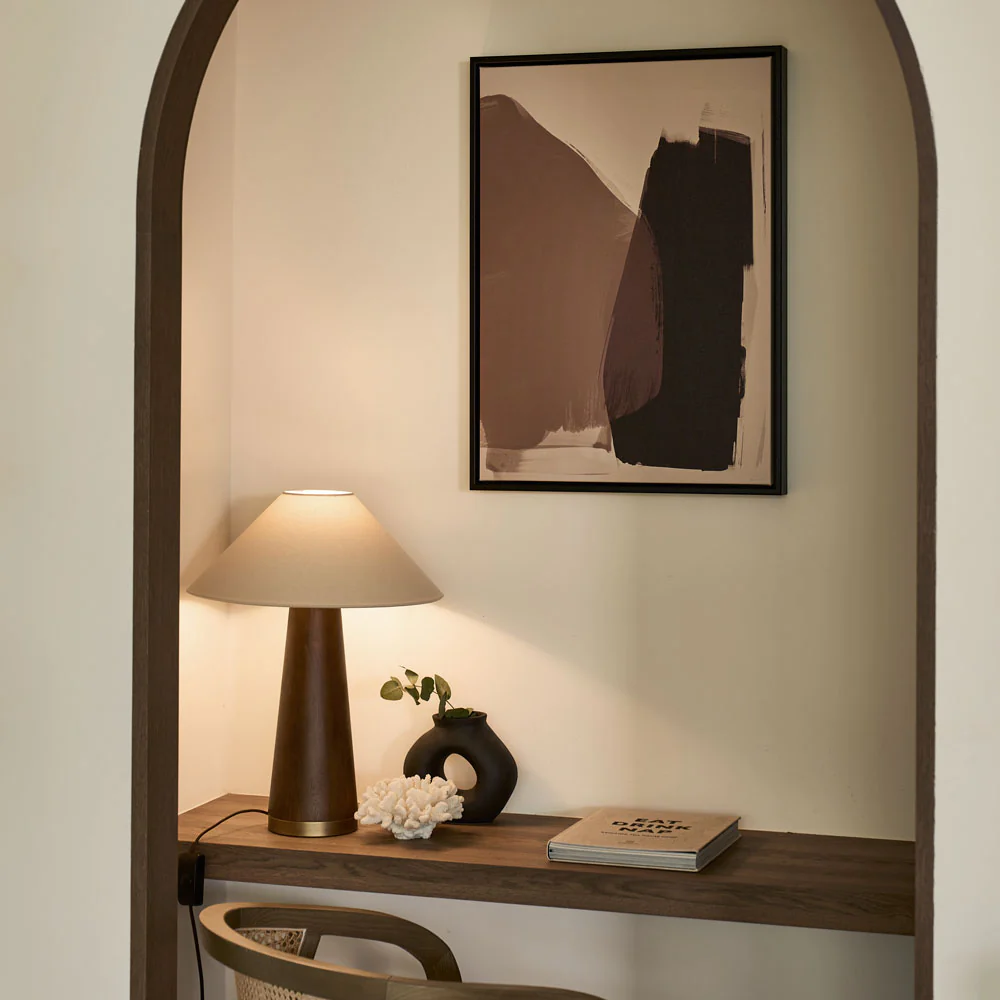
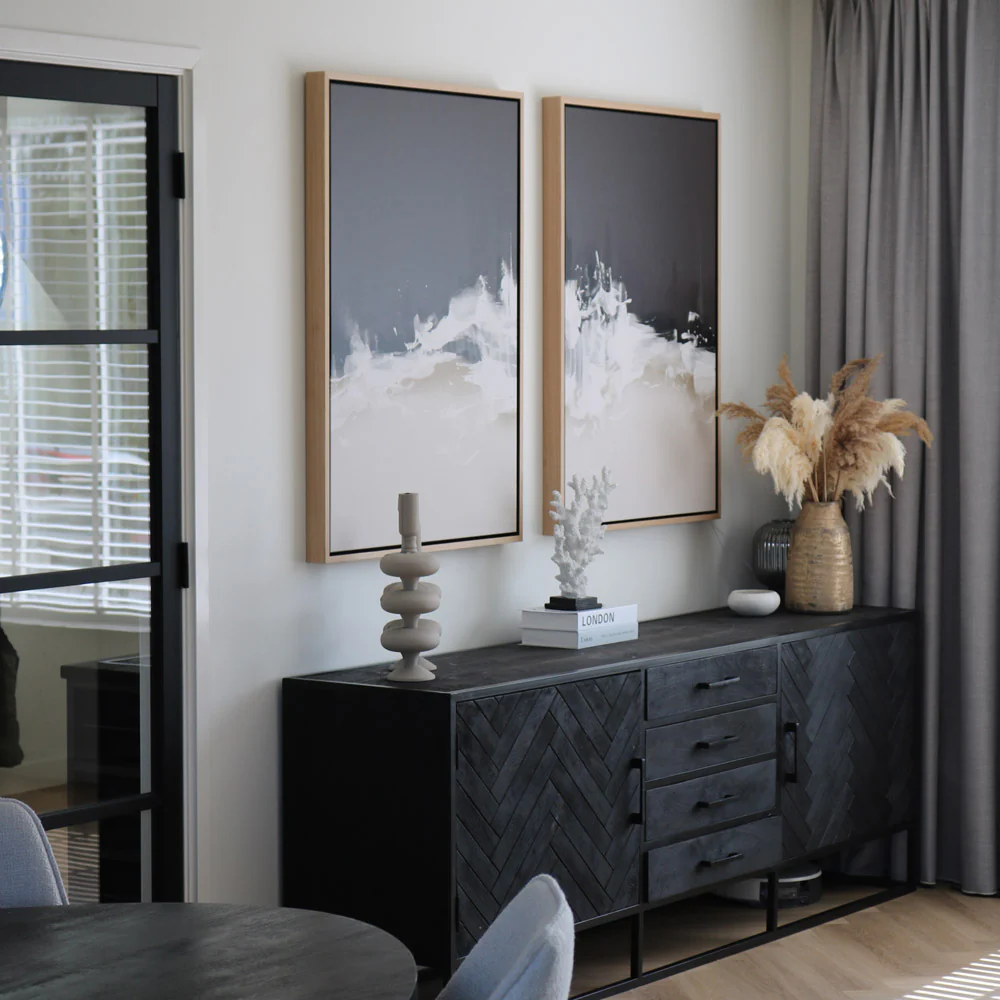
So our job is to create the remaining ten percent. That might come through artwork. Or flowers, cushions, a vase, plants, small accents that tie everything together. Sometimes we bring the outside in, for example by introducing greenery.
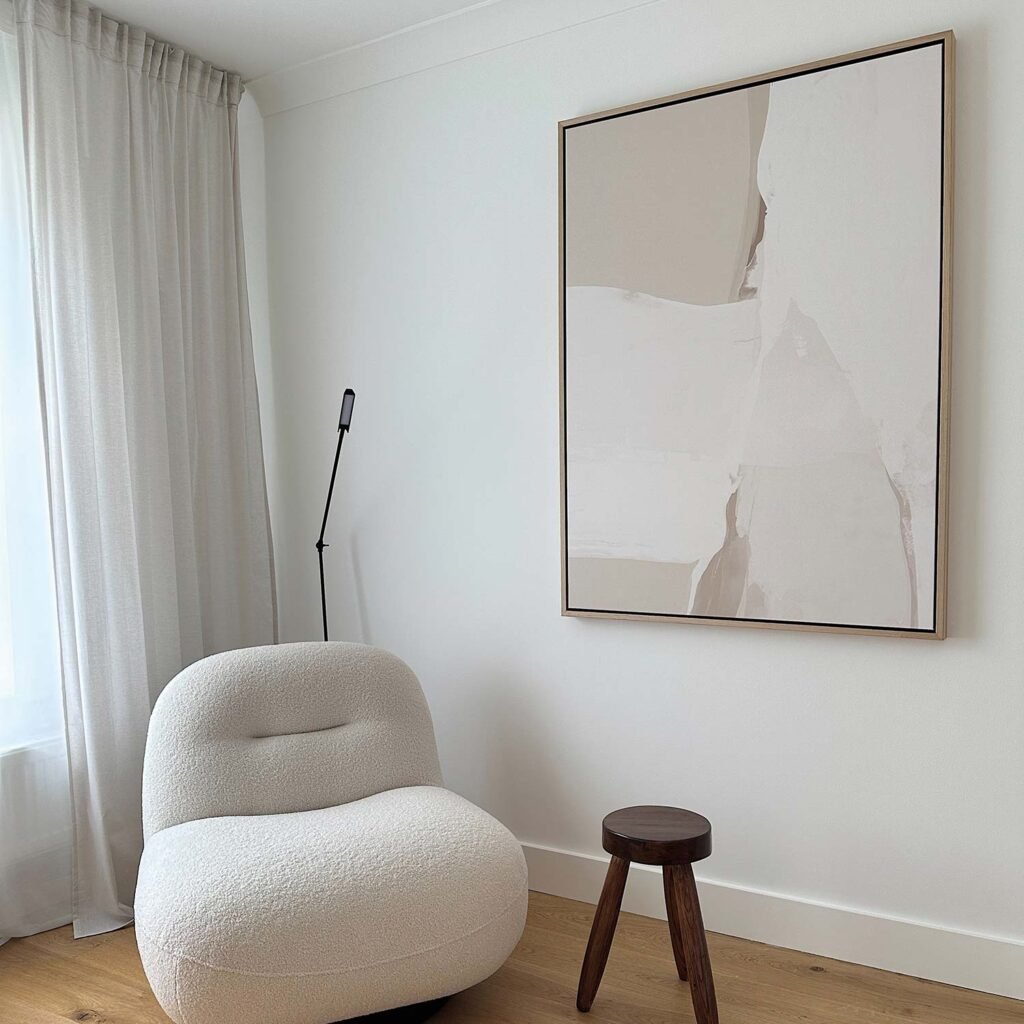
Photos and Artwork by Green Lili
Do you always begin with color?
Not necessarily. Sometimes color begins with something that’s already inside the property. I pick the first element that speaks to me.
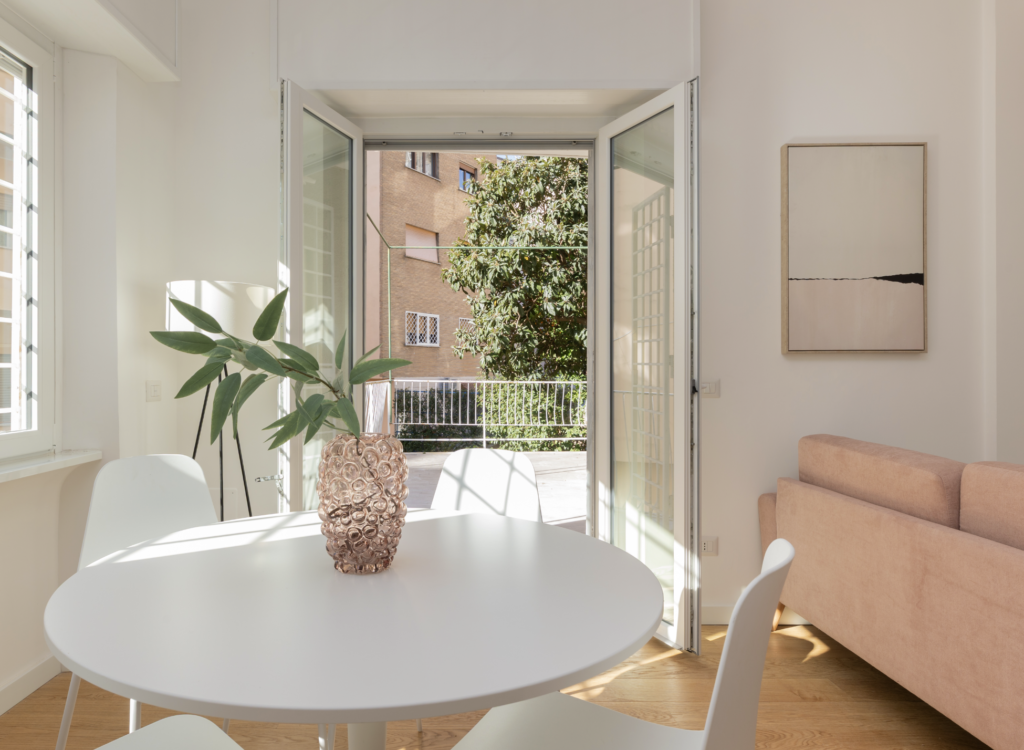
Photo: Fabrizio Vinti
Recently, I staged an apartment in the Marconi area where the master bedroom overlooked a beautiful garden. The very first thing I noticed was a banana tree outside the window –you don’t see banana trees every day!
Immediately I knew we could introduce slightly brighter greens throughout the apartment. The property itself was speaking. Sometimes the floors speak first, sometimes it’s the architecture, other times it’s the view. You simply have to listen.
That’s fascinating. The house almost tells you what it needs.
Exactly. If the property has beautiful parquet floors, they already tell me something. If it has decorative moldings, those tell me something too. Everything influences the furniture I choose.
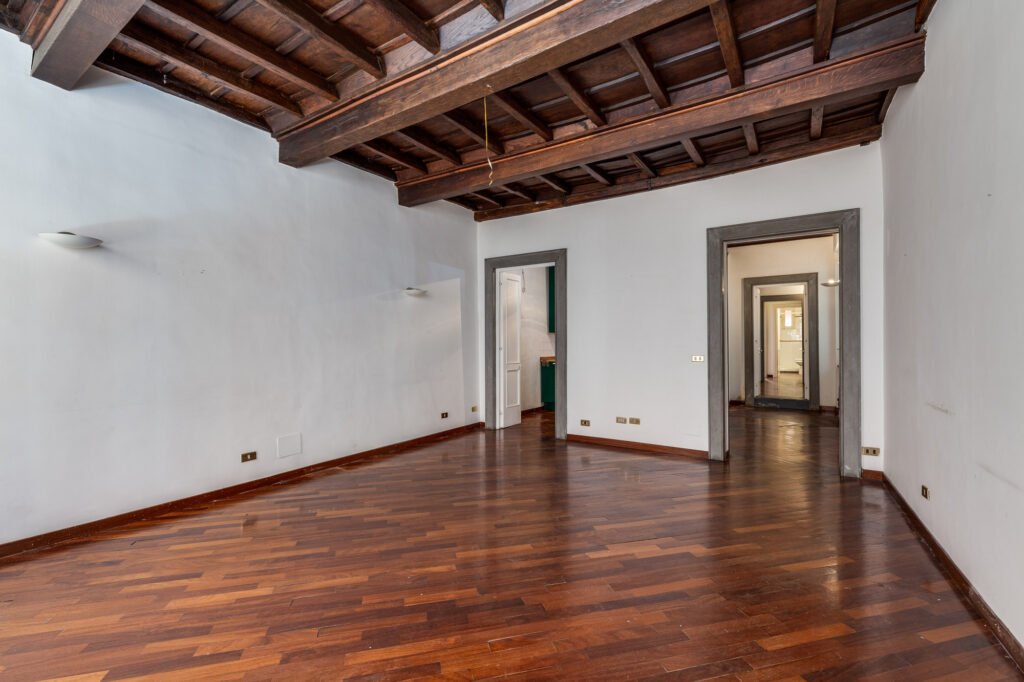
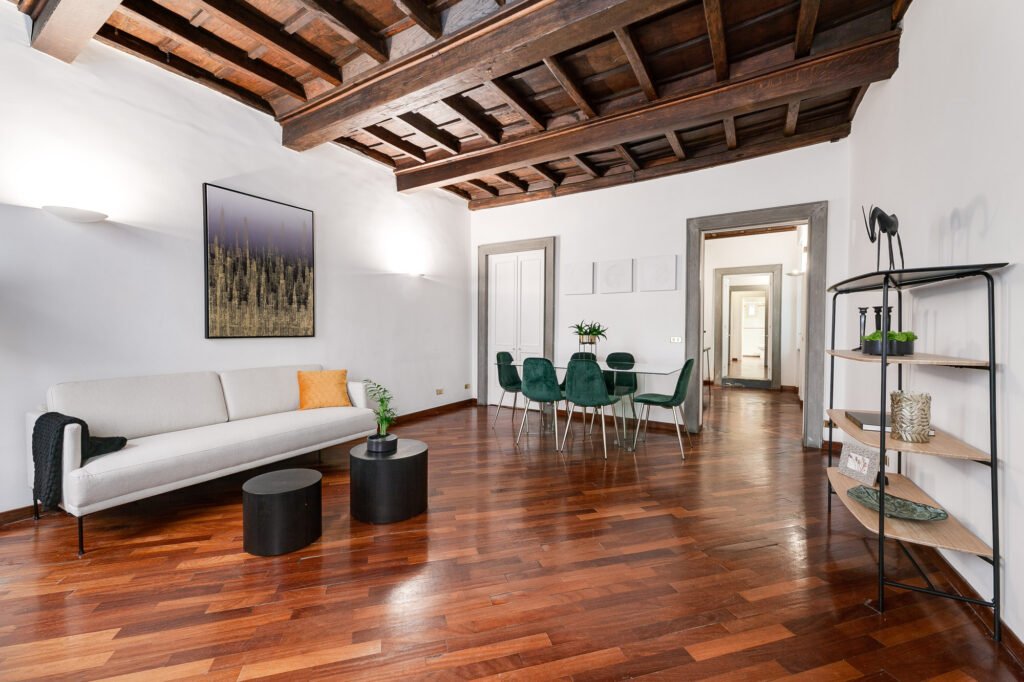
Before After, photo: Fabrizio Vinti
What’s the very first thing you notice when you walk into a property?
Whatever catches my eye first –I never force it. I simply allow myself to notice what immediately speaks to me.
For me, homes have personalities. Some homes feel male, some feel female. Some immediately make you feel welcome –others make me want to leave as quickly as possible. Some are incredibly warm, others feel cold.
Many newly renovated apartments, unfortunately, all look the same because everyone follows the same trends: Calacatta Gold bathrooms, round mirrors, long, narrow walk-in showers.
Is there one detail that almost always catches your attention?
Very often it’s the kitchen backsplash –people don’t realize how important it is! If I have a home with 60 percent white walls and thirty percent beige flooring, then the backsplash suddenly becomes this strong horizontal band of color; that’s often your missing ten percent.
Once I identify that color, I repeat it subtly throughout the home. Perhaps in a vase, in artwork or in cushions. The whole property suddenly feels harmonious.
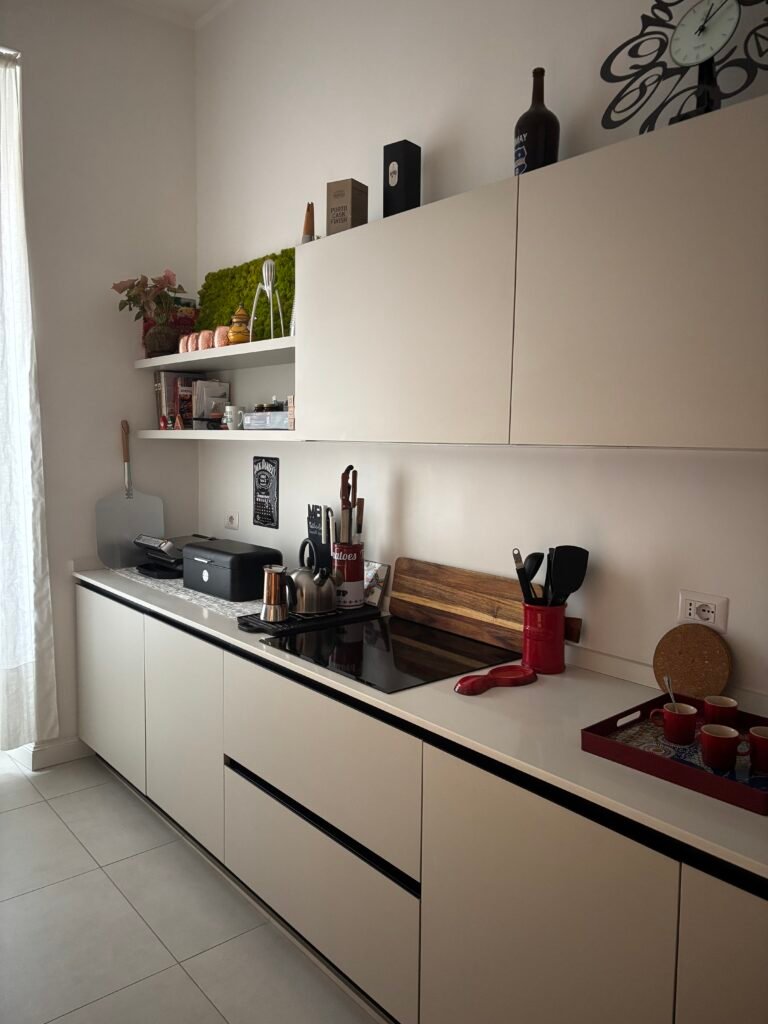
Before
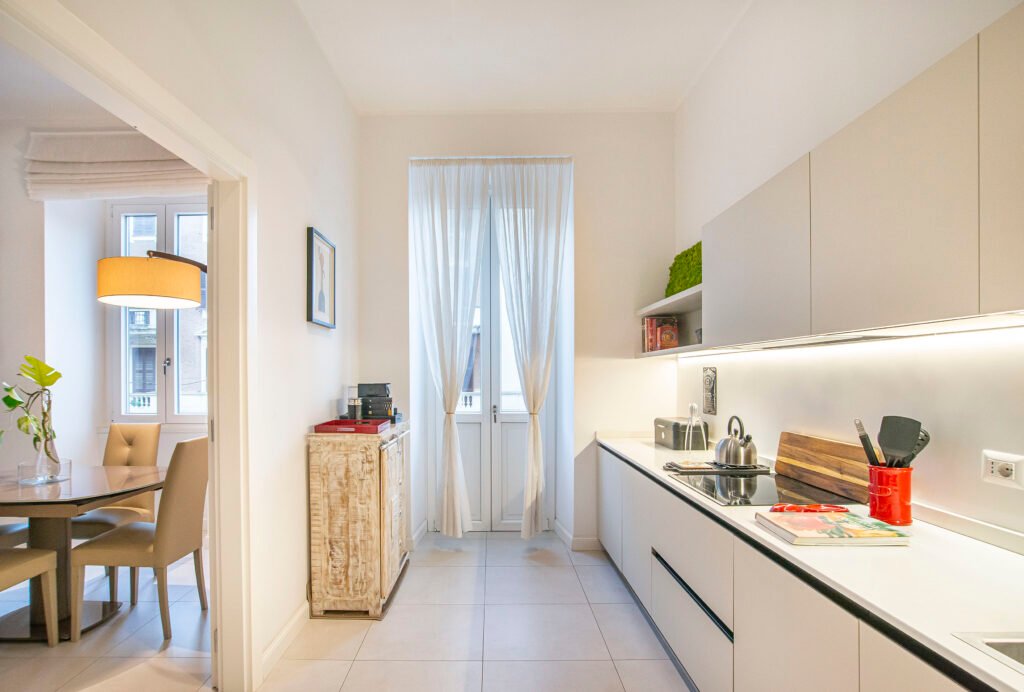
After, Photo : Prisca Curti
You also spoke about proportions. Can you explain that?
Absolutely. When we style accessories, we almost always work in groups of three or five. Within those groupings, we want different heights: one tall object, one medium, one small. The eye naturally enjoys that rhythm.
It’s something you can certainly learn through training, but you really understand it only by doing it day after day – you need to have a connection with the space and with the furniture.
Is that where experience becomes irreplaceable?
Definitely. Every morning I open our warehouse. I look at all the furniture and say, “Good morning, everyone. Who’s ready to go out today?” People laugh when I say that, but every piece has its own personality.
When we have, for example, a €500,000 property, I’m already looking for the piece that’s going to become the protagonist. Every staging has a protagonist.
Where do you begin when you’re planning a staging?
Usually with the sofa. It’s the largest piece in the room and it’s often the first thing people notice. It needs to be beautiful, comfortable and inviting. From there, everything else begins to fall into place.
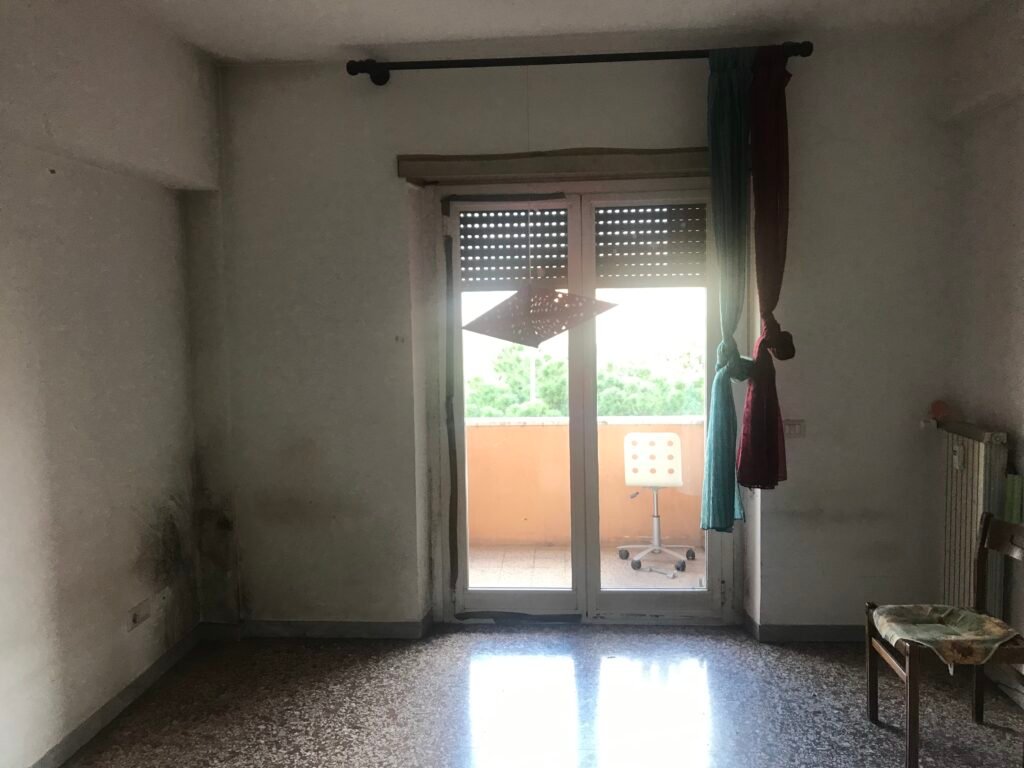
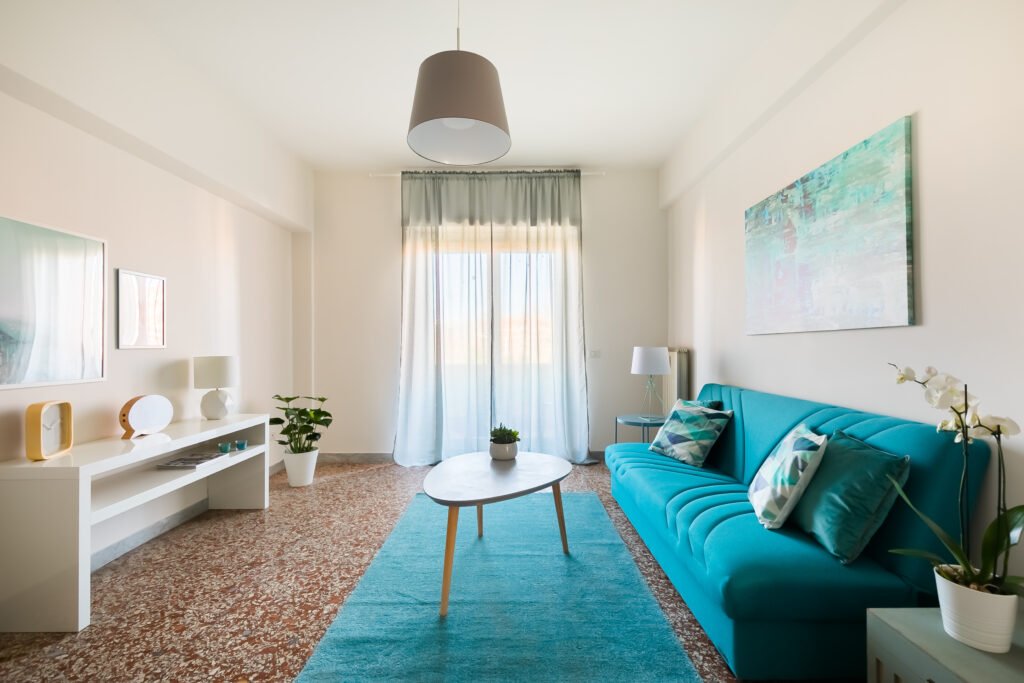
Before After Photo : Fabrizio Vinti
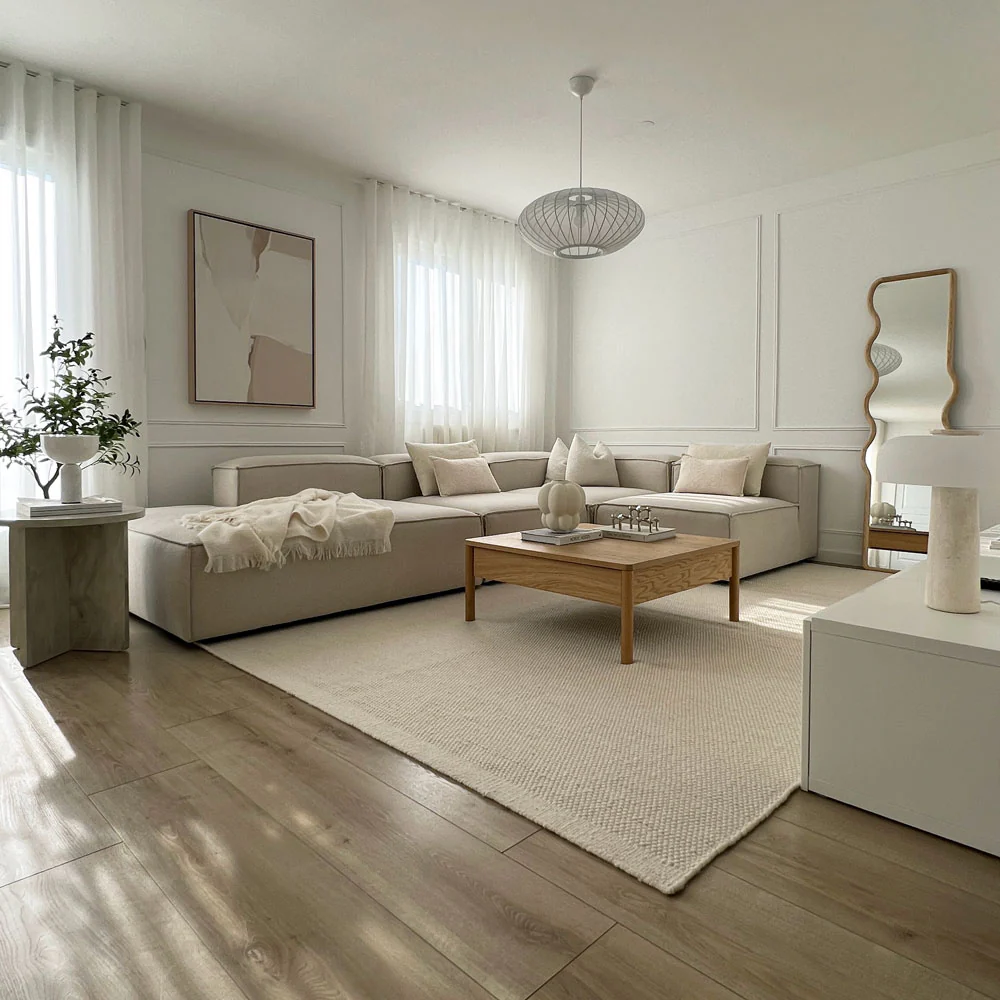
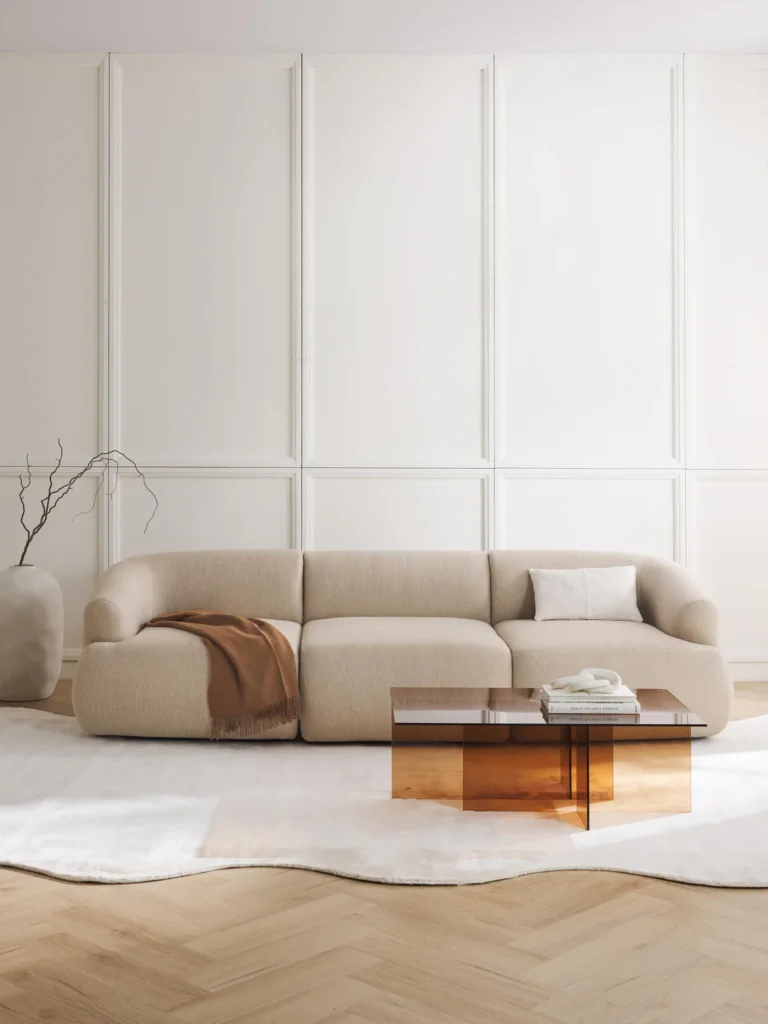
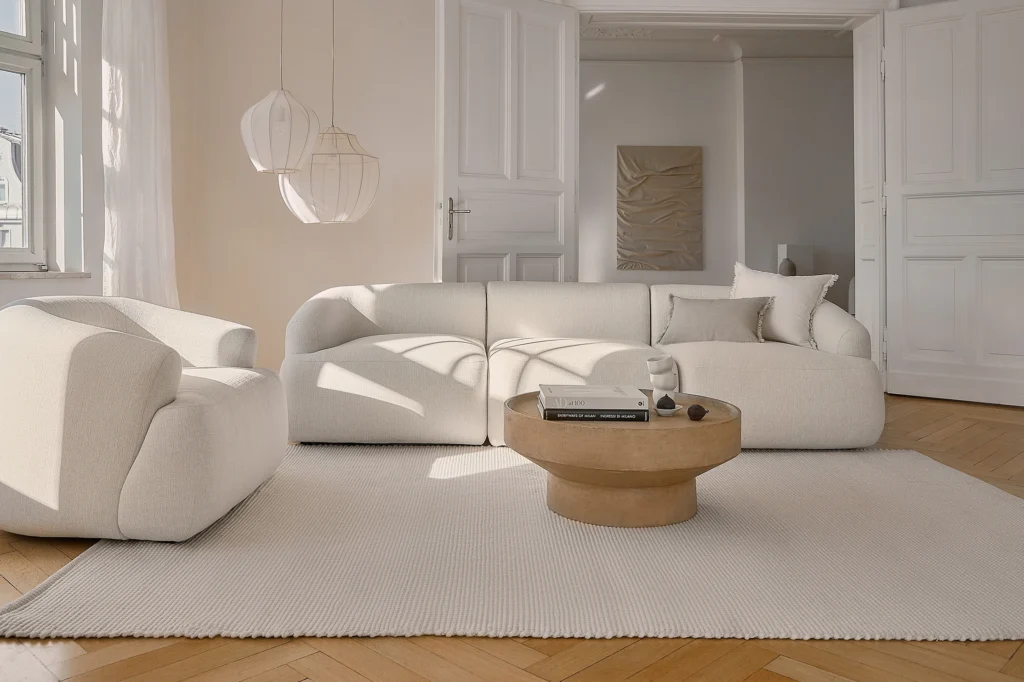
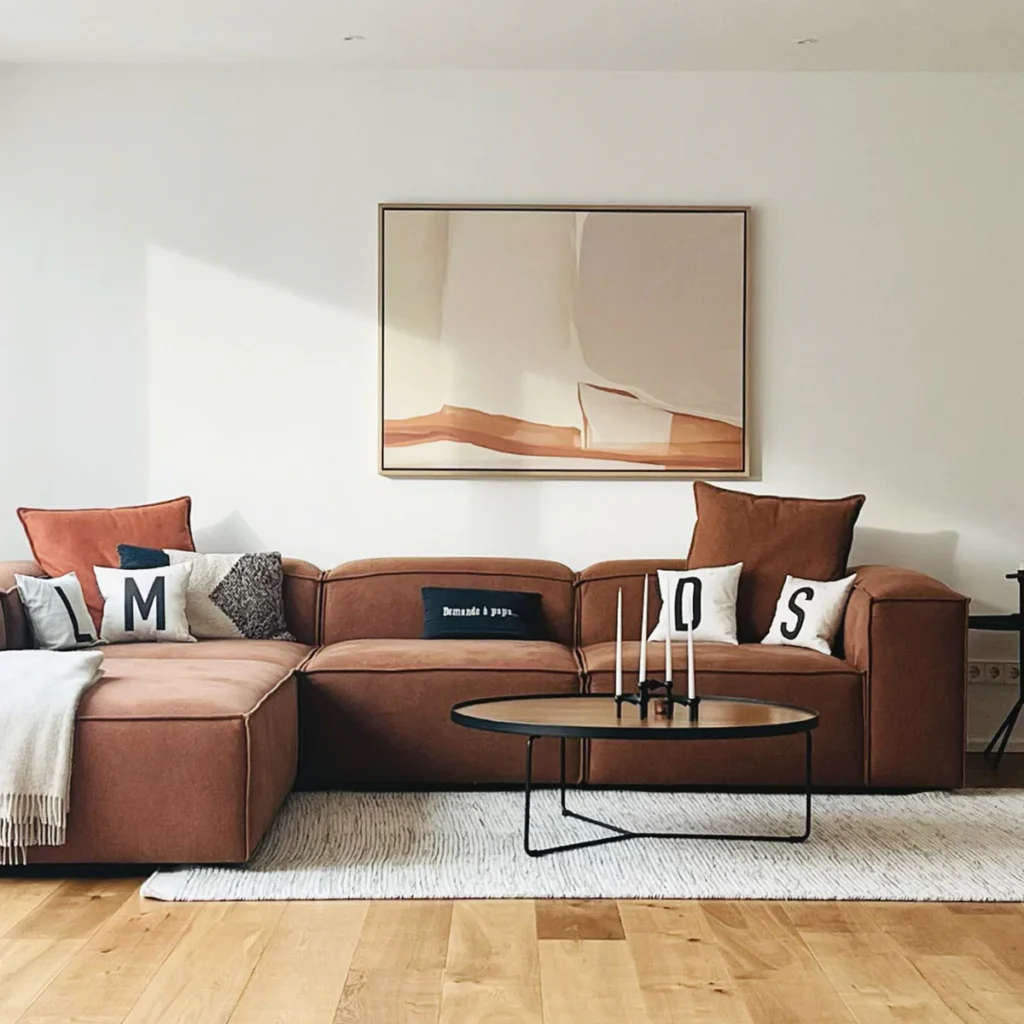
Sofa Photos courtesy of Sanja Radovanovic
Home Staging in Italy Versus America
One thing I was curious about is whether home staging in Italy is different from staging in America?
There are plenty of differences. The biggest isn’t actually design, it’s people. The way Italians relate emotionally to their homes is very different from Americans.
Americans are generally much more detached; they move more easily. They downsize, and when their children leave home, they sell the house and they move into retirement communities. It’s simply part of life.
Italians are different. The family home often represents the greatest inheritance parents can leave their children. The emotional attachment is much stronger. That changes the entire conversation when you walk into someone’s home.
Are there stylistic differences too?
Yes. Americans are much more willing to experiment with color. Especially with sofas.
Another big cultural difference is the dining table. In America you can have a dining table, of course, but people often really father around it for Thanksgiving or other big celebrations. In Italy, the dining table is still one of the emotional centers of the home. Families gather there every evening, meals are shared and the table needs to be large enough and comfortable enough.
In America, although dining rooms certainly exist, daily life often revolves much more around the television. The conversation areas are organized differently.
Culture shapes design far more than people realize.
And that changes how you stage a home?
Yes, because culture changes the way spaces are used.
When I’m doing interior design for a family with small children, for example, I might choose pieces that are easily washable.
But when I’m staging a property, I’m not thinking about whether that future buyer has a child. I choose the piece because it works in that specific house, according to the property and price point.
Professional Home Staging Techniques: Making Small Spaces Look Bigger
You’ve mentioned that home staging is about highlighting a property’s strengths. Are there techniques that make a space feel larger?
Absolutely. One simple example is using glass furniture; I often use glass coffee tables in smaller spaces because visually they almost disappear. The eye keeps travelling through the room instead of stopping at a solid object, so the space immediately feels larger.
They’re not really tricks, they’re techniques. Everything we do should highlight the property’s best features.
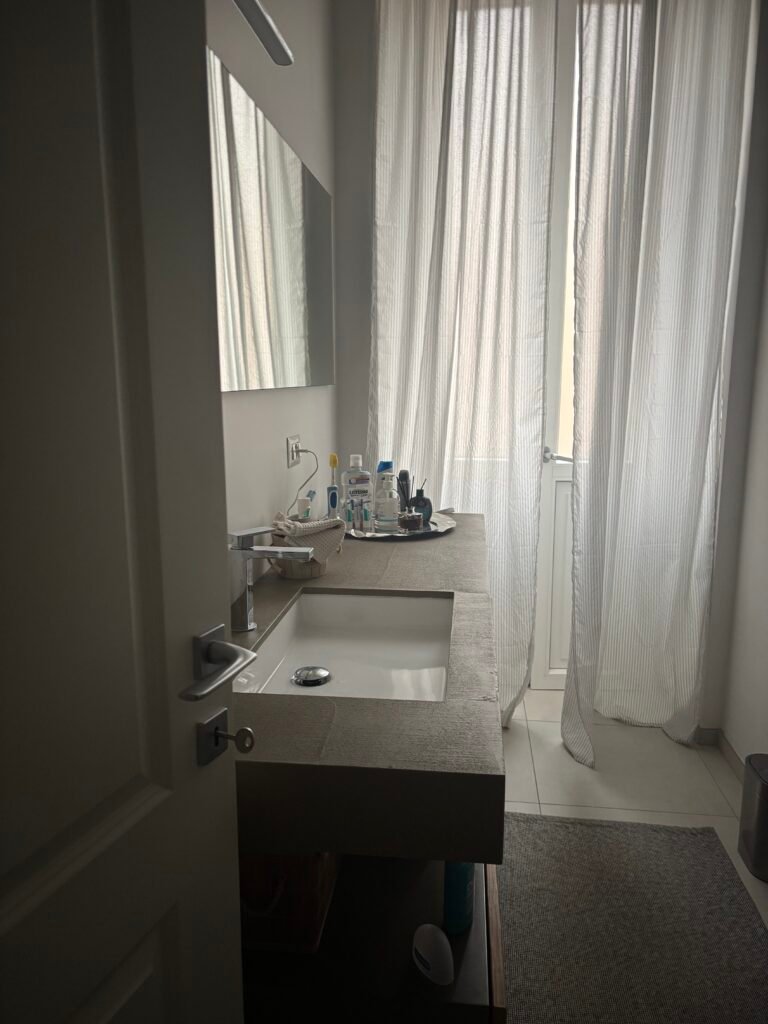
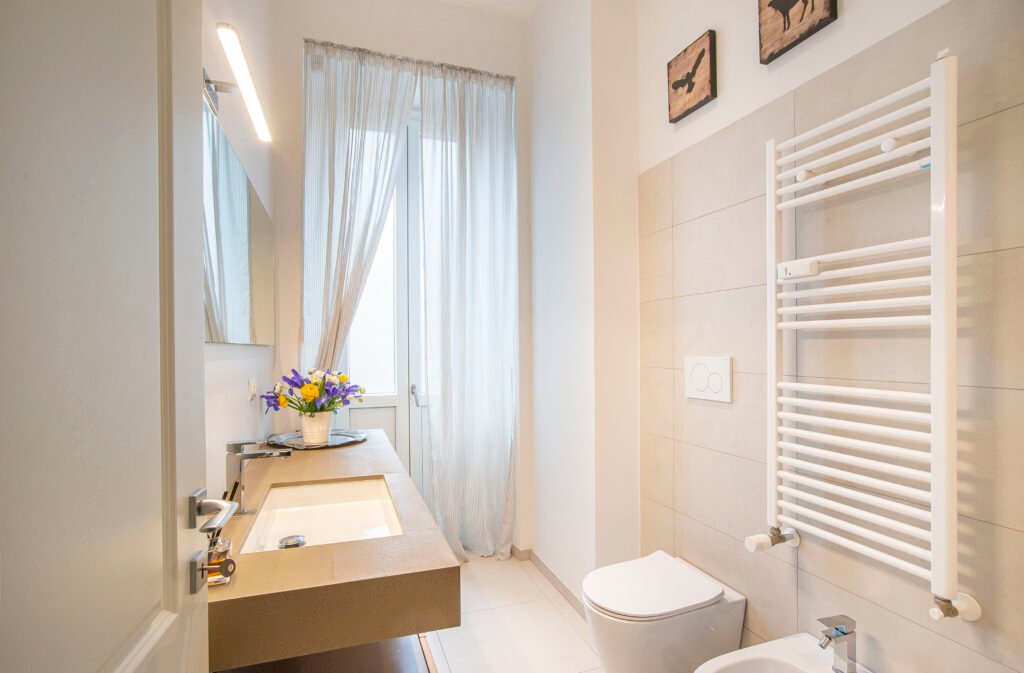
Before After, Photo: Prisca Curti
Do you ever try to hide a property’s flaws?
Never. If there’s a leak on the wall, for example, I’m not going to put a plant in front of it. That’s not what professional home staging is. A professional home stager, together with the real estate agent, should tell the homeowner, “If you want to maximize the value of your property, this needs to be repaired.”
We highlight the positive features, but we don’t disguise problems.
That’s a very honest approach.
It has to be. Home staging is preparation. It’s enhancement, not deception. Our job is to present the property at its very best—not to hide defects that buyers will eventually discover anyway.
What happens when you’re staging an older property that can’t be completely renovated from top to bottom?
That happens all the time.Sometimes we’re working with bathrooms from the 1960s or 1970s.You work with what you have.People often ask if I add lots of accessories.Actually, less is more.
One thing that surprised me was that you remove shower curtains before photographing a bathroom. Why?
We always remove all the shower curtains. Today’s buyers get their first impression of the property online before they ever visit it. Usually, a bathroom is photographed from one angle. If there’s a shower curtain closed across the back of the room, psychologically the viewer immediately wonders, “What’s behind the curtain? “Of course, they know it’s a shower. But why create a visual barrier? Open it. Let people see the entire room. The eye wants completeness.
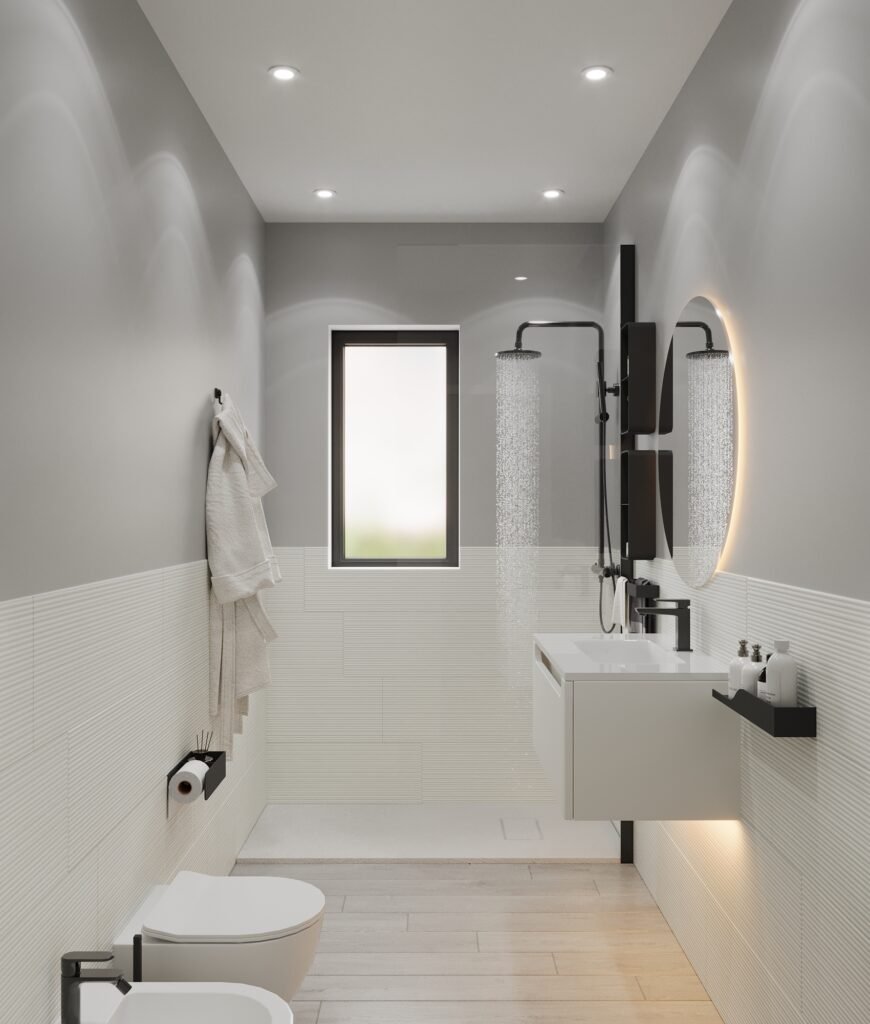
Photo courtesy of Sanja Radovanvic
That’s such a small detail, but it makes perfect sense.
Exactly. The more visual information people receive, the more comfortable they feel. When something is hidden, the imagination starts inventing problems, and you don’t want that! So, if a bathroom is already very small, there’s even more reason to keep it visually open.
An if it’s tiny, adding too many accessories actually makes it feel even smaller. Again, less is more.
Earlier you mentioned repeating colors throughout the home.
Yes. Suppose the kitchen backsplash has a beautiful warm yellow tone. Instead of introducing completely different colors elsewhere, I’ll subtly repeat that yellow in artwork, flowers or accessories. Suddenly the entire property feels cohesive — everything belongs together. That brings us back to that famous ten percent part.
What about older homes filled with heavy dark furniture? How do you soften those spaces?
That’s another very common situation. Imagine a bedroom with dark brown wardrobes, dark brown bedside tables, a dark brown headboard. Everything is heavy; the room immediately feels oppressive. So, I soften it. Very often with powder pink. Sometimes with soft white, sometimes pale yellow, sometimes a very delicate pastel green.
The brown suddenly becomes lighter because the eye has somewhere softer to rest.
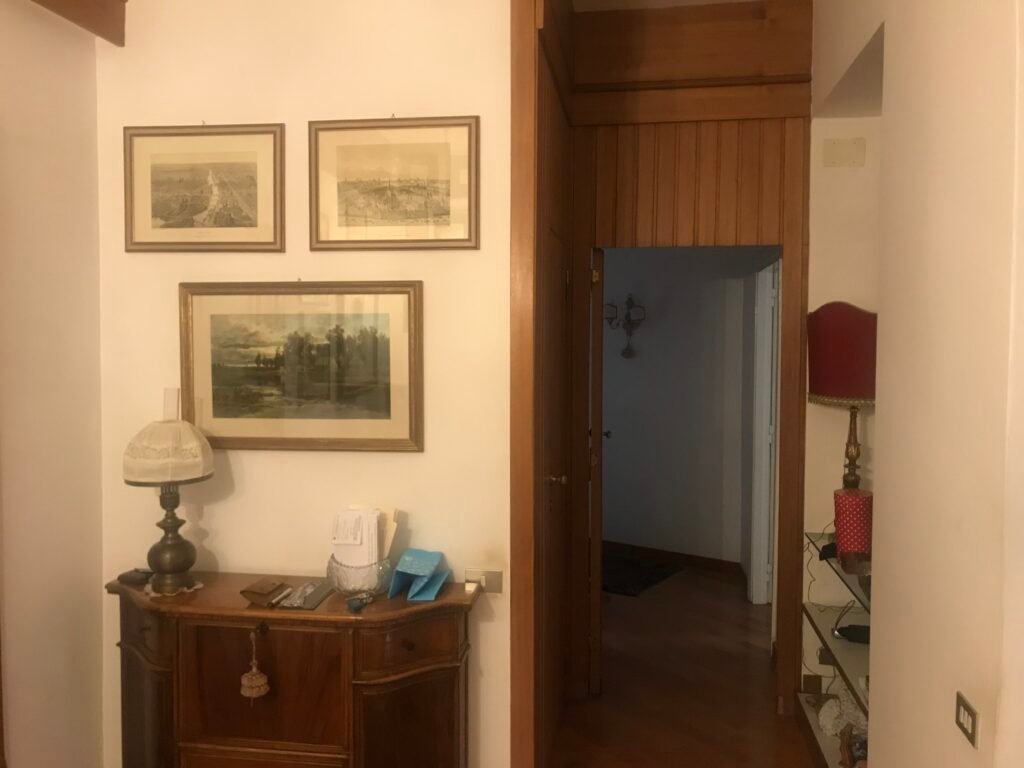
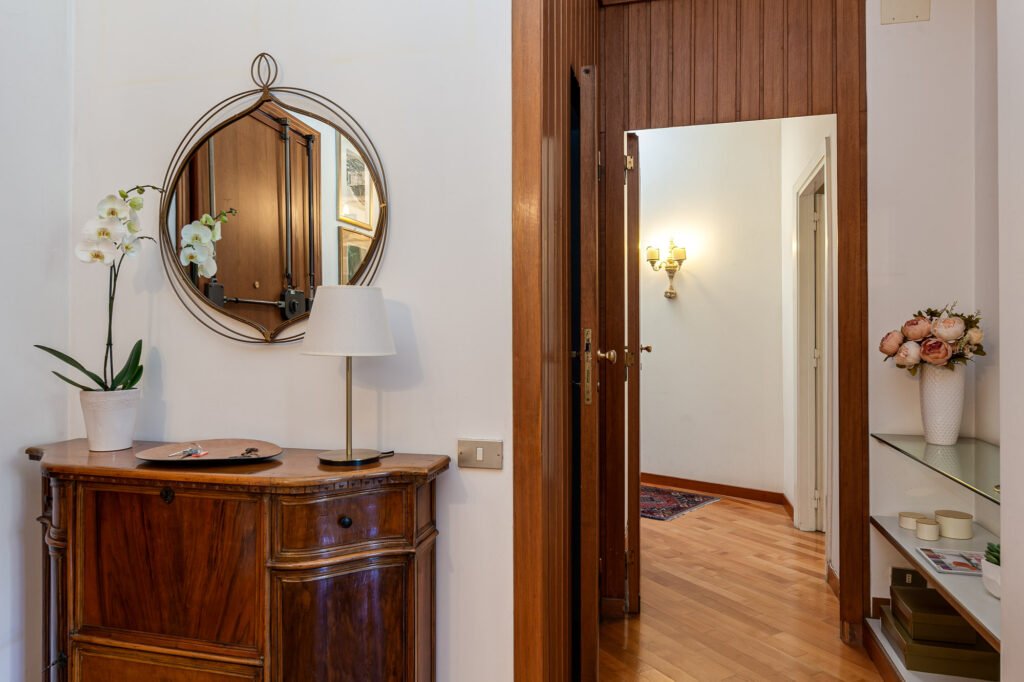
Before After, Photo: Fabrizio Vinti
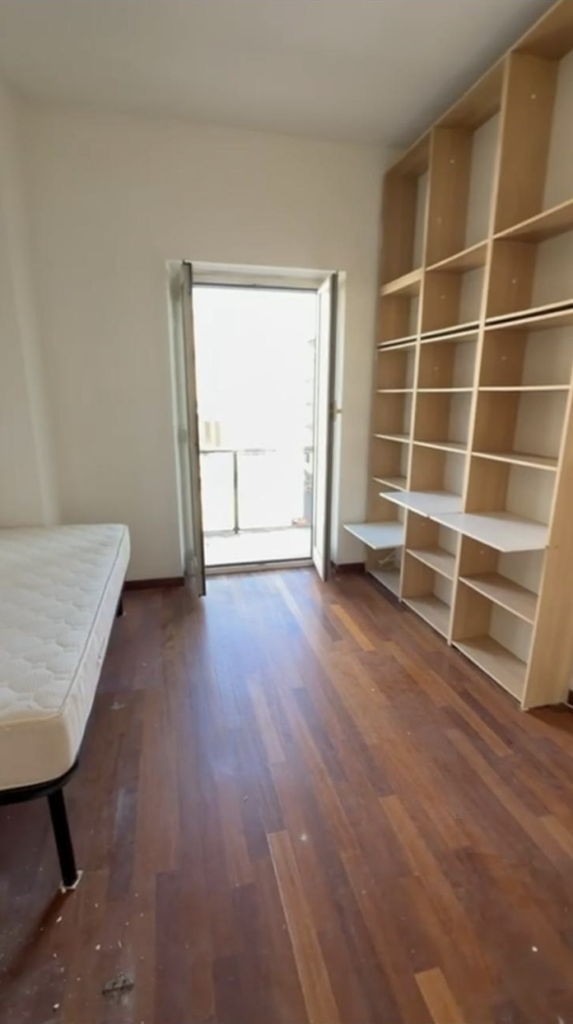
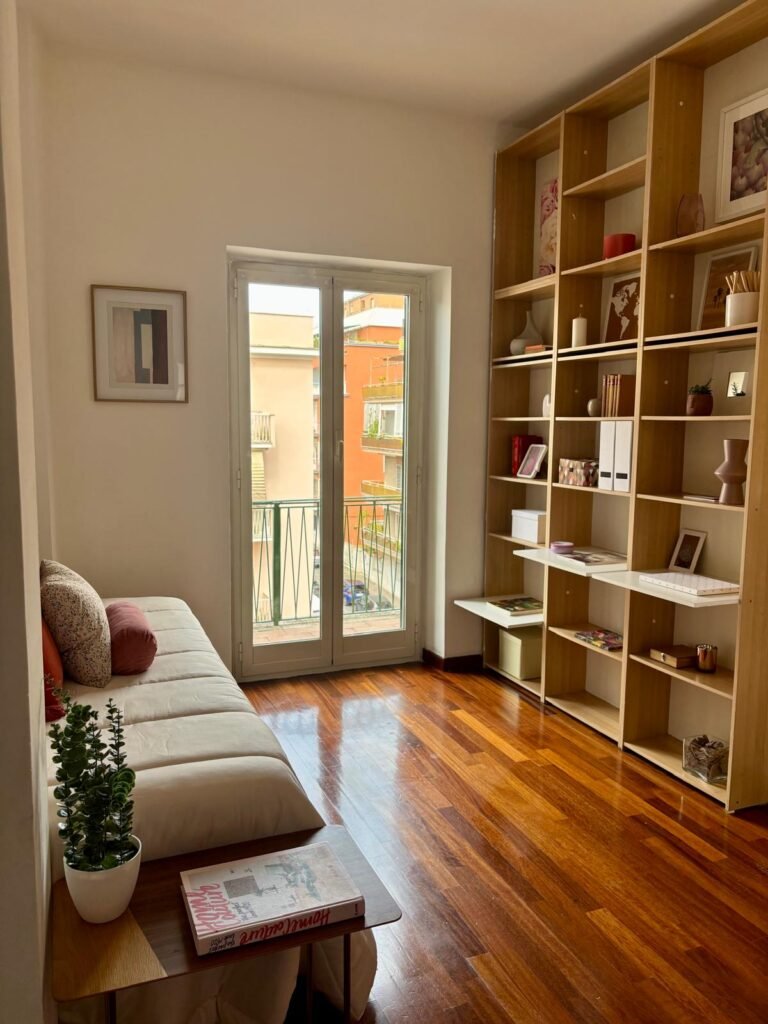
Before After, photo Fabrizio Vinti
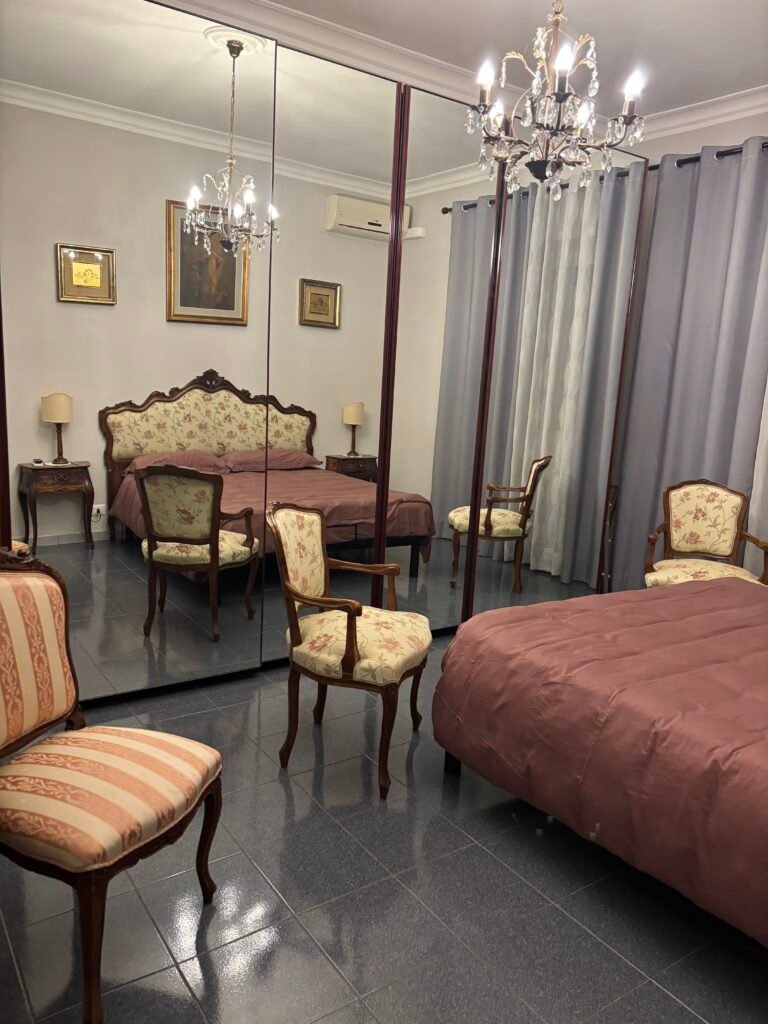
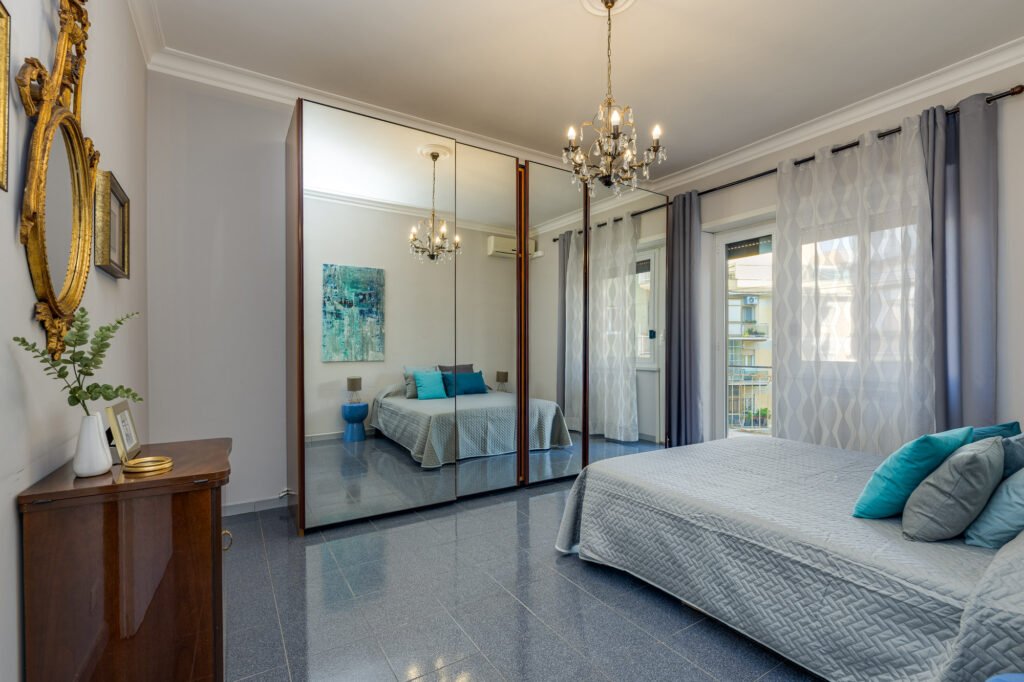
Before After, photo : Fabrizio Vinti
What Being Thrown In at the Deep End Taught Her
Looking back, what did you learn from being thrown headfirst into your first homestaging projects before you had even had formal training?
The biggest lesson wasn’t actually about design. It was about myself. Before that, I always believed everything had to be perfect before starting. I’m somebody who analyzes everything and waits for the right moment to do it.
For me, the right moment would have been when everything was perfect: when the warehouse was filled, when I had the know-how, when I had the certificate and when I felt ready. Instead, life forced me to begin before I felt ready. Sometimes jumping off the cliff, at least for me, is the best thing to do.
Because then there’s no hesitation?
Exactly. There is no hesitation. You just go for it!
Ohterwise, I would have definitely asked myself, “Am I good at this? Am I doing it the right way? Is this what they taught me?”
That completely changed the way I approach challenges.
The Business Side of Home Staging

Once you’d completed your training, was there anything that surprised you?
Yes. Not so much the creative part, but the business side. Pricing, running a warehouse, building systems, creating processes. That’s what formal training added: the practical business knowledge.
You can apply the model anywhere in the world, but you adapt it according to the market where you live.
Did you ever think about simplifying your business and only offering consultations?
Yes. As a homestager, I could easily decide to do only consultations. In fact, home staging is wonderful because there are many ways to build the business.I could choose to offer consultations only, and then there would be no warehouse, no furniture, nologistics.Very little overhead and potentially even higher profits.
Why don’t you?
Because I wouldn’t feel complete. Every home deserves to be staged properly. Why should I stop halfway? I could decide to only stage occupied homes, where no furniture has to be brought in. Or I could only work on luxury homes, I could eliminate all the difficult parts. But that’s not who I am. I chose to do the whole thing.
Is that because of your philosophy as a company?
Exactly. When we founded the agency, we wanted to make professional home staging accessible to everyone. Not just luxury clients. Every seller deserves the same attention, the same care and the same strategy.
Sometimes it’s more stressful to work on luxury projects rather than traditional ones.
Really? Why?
Luxury clients are used to the finest things in life. Their expectations are naturally much higher. Every single detail matters. Everything has to be perfect. There’s much more pressure.
Whereas many successful people—particularly in America—don’t necessarily live the way people imagine. Some of the wealthiest people are incredibly humble. You’d never know. They’re driving ordinary cars, shopping in ordinary supermarkets.
Then you walk into their homes, and that’s where you discover who they are. True luxury rarely needs to announce itself.
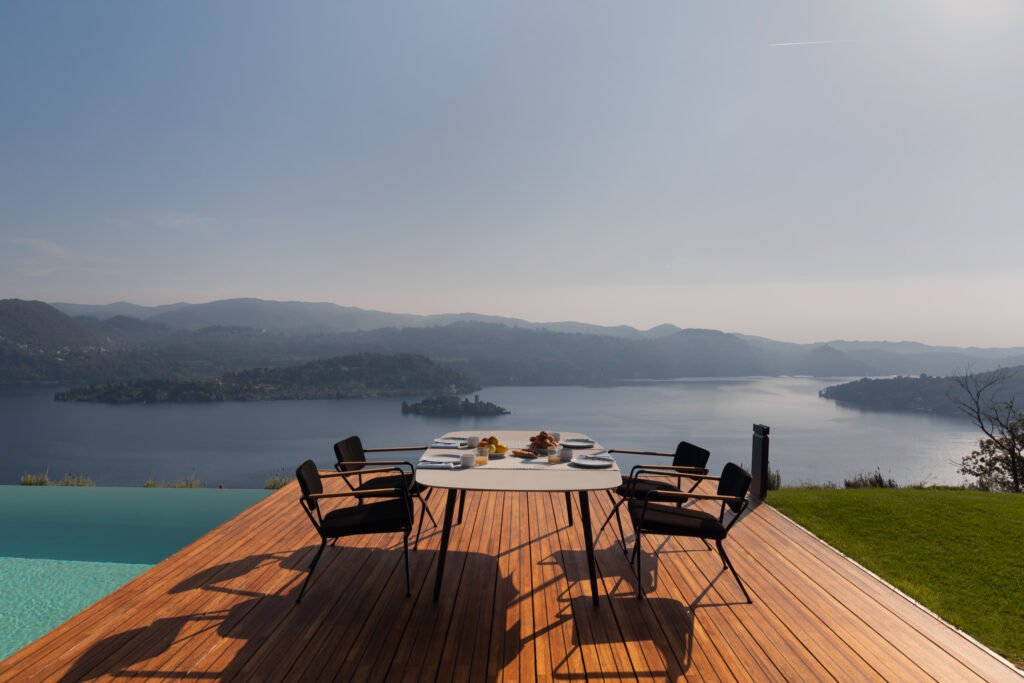
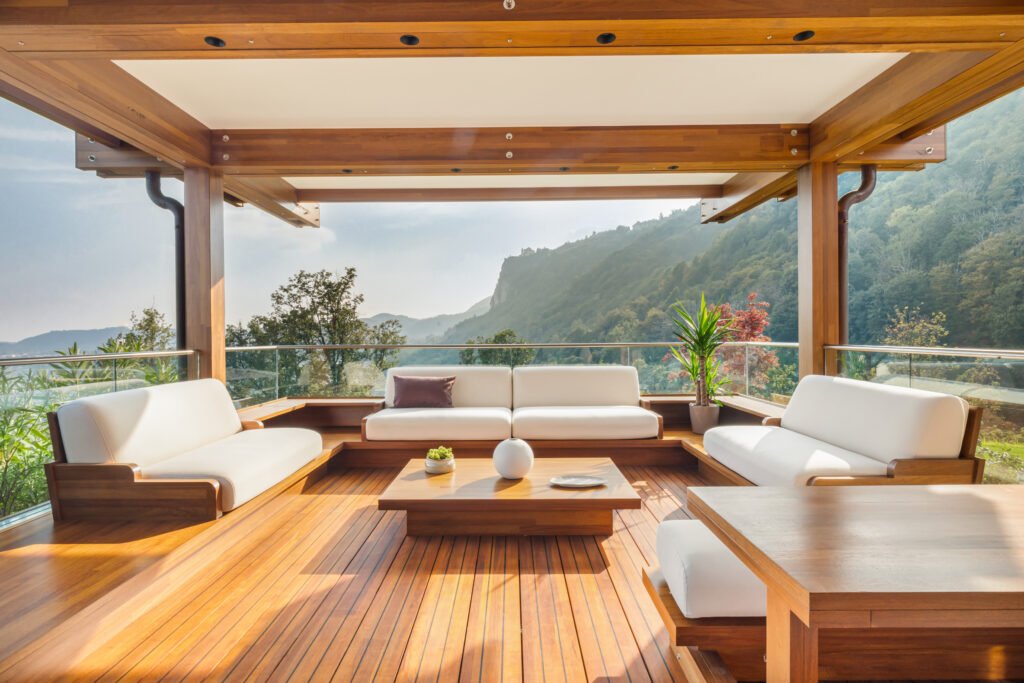
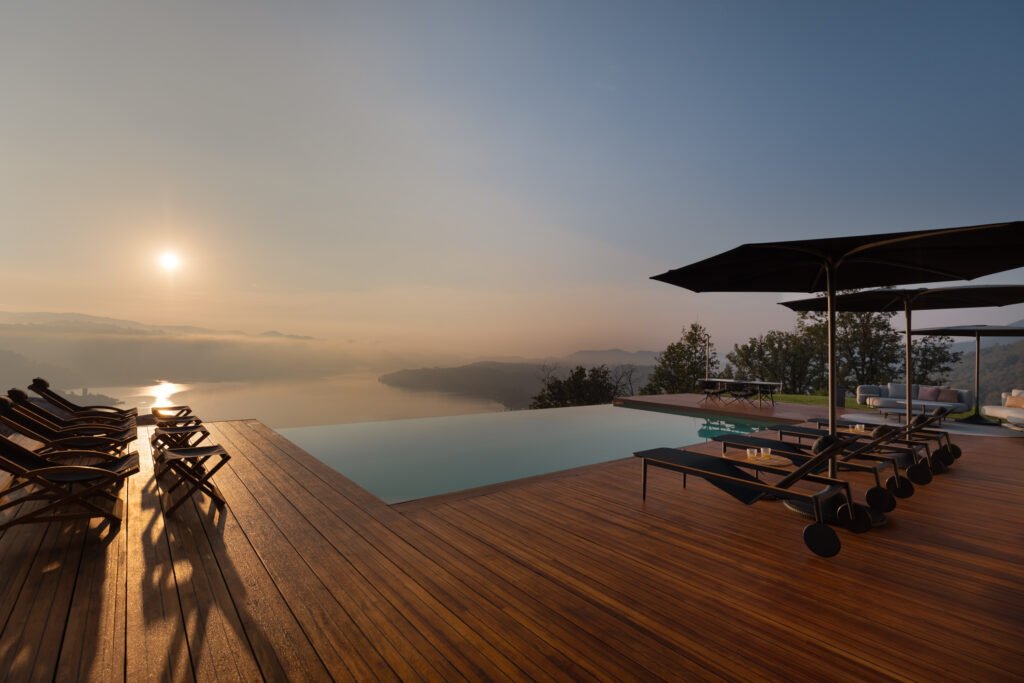
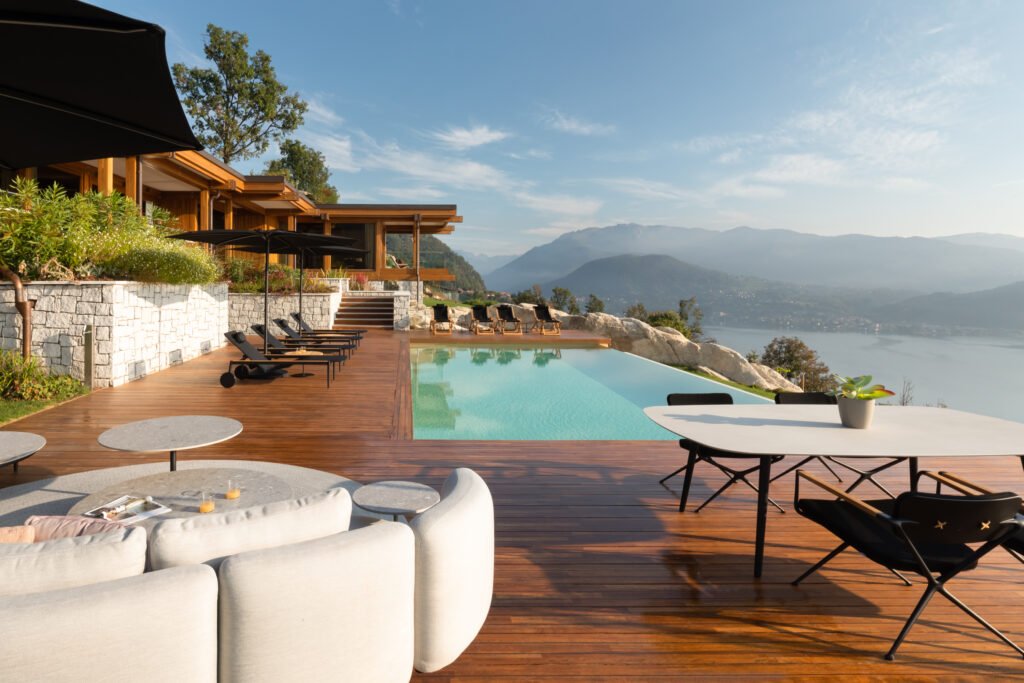
Photos: Edi Solari
The Psychology of Home Staging: Getting Clients on Board
You often say that home staging is fifty percent creativity and fifty percent psychology. What do you mean by that?
The creativity is actually the easier part. The psychology is what makes the real difference. If homeowners aren’t on board with the process, the project becomes much more difficult. That’s why I always speak with them before I ever visit the property.
What do you say during that first phone call?
I usually tell them, “I understand you’ve already been told what home staging is. This call is simply to answer any questions you might have. I completely understand that having a stranger walk into your home can feel uncomfortable. You may wonder whether I’m going to move all your belongings or whether I’m going to criticize your home.”
Then I explain that I’m there to work with them, not against them. I tell them, “We’re going to become a team. Our shared goal is to help you achieve the highest possible value for your biggest asset.” That changes everything. People immediately relax.
That’s wonderful psychology. You’re making them feel that you’re on the same side.
Exactly. Sometimes I even ask them to send me a short video of the property before I arrive. Then I watch it and send them a voice message saying, “Thank you. I’ve seen the house. This is what we’re going to do.”
Sometimes there’s a great deal to do, sometimes there isn’t. But I always make it clear that I don’t expect them to do everything alone.
Can you give me an example?
Of course. Imagine I’m coming to your home tomorrow.The first thing I’d probably ask is, “What does your bathroom countertop look like today?”
Honestly? Probably full of things: skincare, Hair products, toothbrushes, everything I use every day.
Exactly. And that’s perfectly normal — You’re living there! But for the photographs, it should feel like a luxury hotel. So, I’d ask you to clear the countertop. Then add fresh towels, maybe flowers, a beautiful soap dispenser.
Everything else disappears. Not because it’s wrong, but because buyers need to imagine themselves there.
That makes complete sense.
And I never ask people to do everything before I arrive — I want them to live normally that morning. Brush their teeth, have breakfast, use the kitchen. Then, once I’m there, we prepare those final details together.
I think that’s much kinder. It almost feels like you’re entering someone’s private world.
You are. And that’s why trust matters so much. It’s actually easier with complete strangers than with friends. A stranger can professionally suggest changes; a friend might make you feel judged.
Do you often become close to your clients?
Very often. We’ll end up having coffee together. Sometimes lunch together. Many homeowners start telling me the story behind the move, why they’re selling. Sometimes they’re happy reasons. Sometimes they’re very difficult reasons.
In many cases I’m not only staging a house, I’m also listening to someone’s life.
When Clients Trust You Beyond the Sale
WHEN CLIENTS TRUST YOU BEYOND THE SALE
Have clients ever asked you to design the home they’re moving into?
Yes, that has happened. One recent example involved the family of Vittorio Feltri. They had bought a property through our agency, and the agency gave them my number. They were still in Milan and trusted us completely. They asked me to take over the interior design project for their new home.
Normally, I wouldn’t have accepted because interior design projects require three or four months, whereas I can stage two properties in a single day. But because it was connected to Vittorio Feltri, whom I’ve always admired as a journalist, I accepted. It was a pleasure.
The Logistics Behind Home Staging
Earlier you mentioned that the logistics are almost like running an army. What’s the most rewarding part of your work?
When we stage empty properties…Seeing the transformation. Walking into an empty apartment and then seeing the finished result –that’s incredibly satisfying.
And when it’s an occupied home?
Then the most rewarding moment comes later: when I hear that the property has sold. Especially if there was a difficult personal story behind the sale. Knowing that our work helped someone through an important transition in life, that’s incredibly rewarding.
And what’s the hardest part?
Without question, logistics.
Why?
Because everything depends on timing. Suppose we are working with investors, we might schedule a staging for Monday at noon.
Then on Friday the investor calls and says, “We’re still finishing the renovation.” Suddenly everything has to move. But we’ve already organized the warehouse, the trucks, the furniture, the staff. Everything has been planned. Those constant changes are probably the hardest part of the business.
I imagine organization has to be incredibly precise.
It does. We have very detailed systems. If we’re staging two apartments one after another, we prepare every piece of furniture in advance. Everything is labelled. If we are preparing two apartments consecutively in the warehouse, we choose the pieces for each one and different colored stickers identify which apartment each item belongs to. Our logistics team knows exactly where every piece needs to go. That level of organization is essential.
And you have your own logistics team?
Yes. Everything is internal. That’s very important because moving furniture into newly renovated properties requires enormous care. There are freshly painted walls, new flooring, luxury finishes. You can’t afford mistakes.
We’ve even learned that blue jeans can leave marks on freshly painted white walls! Those bi blue shopping bags can transfer their dye color! Everything teaches you something.
Even the way you unload furniture has a system?
Absolutely. A sofa never leans against a wall. It goes directly into position. Smaller accessories stay in the middle of the room until we distribute them. When we’re assembling tables, we place blankets underneath, so nothing scratches the floor.
Even rain changes the way we work because you don’t want velvet furniture getting wet. People often think staging is only creativity. In reality, logistics are an enormous part of the profession.
Helping Shape the Home Staging Profession in Europe
You have become known not only for your company, but also for helping shape the home staging profession in Europe. How did that happen?
When I eventually completed my training, I realized something: Home staging wasn’t just about creativity, it was also about building an industry. I began thinking much bigger than my own company.
When I moved back from Chicago, I told people I wanted to create a European Home Staging Association. Most people thought I was completely crazy.
Did that discourage you?
Not really. I remember talking to my mum and she said “Oh my God, why did you put yourself in this situation? How are you doing to do it now?” And I said, “I have no idea. I’ll figure it out.”
I knew I didn’t yet know how I was going to do it. But I knew I would figure it out. Sometimes you don’t need to know every step before you begin: you simply need to know where you’re trying to go.
Were people supportive?
Very few. If somebody had asked people to place a bet on whether I’d succeed, I don’t think anyone would have.
Except one person.
Tell me about her.
I was at a conference in the United States. There was only one other European home stager there from Switzerland. She was sitting by herself at lunch. I walked over and introduced myself. We’d known each other for perhaps thirty minutes when I said, “I have a crazy idea. I want to create a European Home Staging Association. I have absolutely no idea how. But I know I can’t do it alone. Would you do it with me?”
She looked at me and immediately said, “Absolutely.”
Thirty minutes after meeting you?
Yes! She simply said yes. Years later she told me, “You saved me.”
What did she mean?
She said, “You saved me from becoming a couch potato.” She had reached a point in life where she was ready for something new. This gave her purpose again. That conversation changed both of our lives.
That’s extraordinary!
I think life gives you the right people at exactly the right time. You just have to be willing to ask.
You seem to trust your instincts a great deal.
I do. I really believe people listen when you have something genuine to share.
You’re an incredibly good communicator.
Thank you. I’m very confident — within my areas of strength. If you put me into a room full of mathematicians, I wouldn’t feel confident at all. Everyone has their own place where they shine.

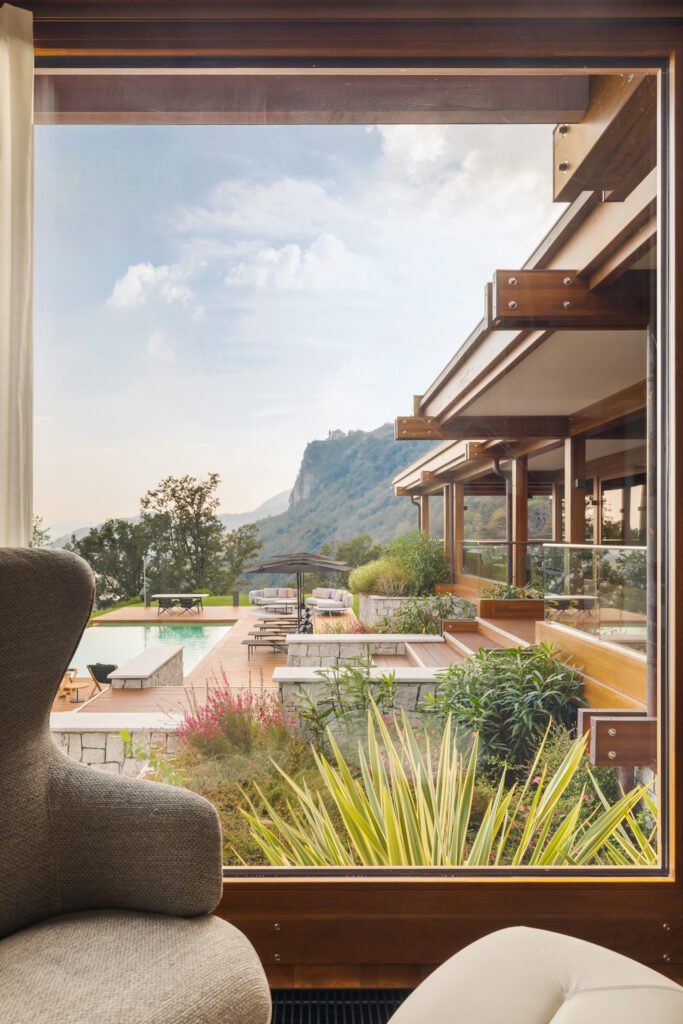
Photo: Fabrizio Vinti Photo: Edi Solari
Creativity, Transformation and the Need to Keep Evolving
You’ve mentioned before that you become bored quite easily. Is that part of why design appealed to you?
Yes. I get bored very easily. Interior design is part of my creative side. I love watching the same rooms get a new life. It’s all about new life, a new transformation. It’s like a snake shedding its skin.
Whether you call me for a color consultation, to update the lighting, or for a staging project, it’s that idea of peeling the old skin off and giving something new life.
Is that why you enjoy staging so much?
Yes. Because every project is different. Every property presents a new puzzle. Even in my own home I deliberately leave little projects unfinished.
Really!?
Yes.My office at home is still unfinished.On purpose.I knew I’d eventually need another creative project. So, I left something waiting for me.Now I’m planning a dark matte black feature wall. I’ll probably keep changing it over time.I always need something creative to evolve.
You’re constantly looking for evolution.
Exactly. Sometimes I even go into my daughters’ rooms and move the furniture around. I’ll swap their desk chairs. Change a corner or refresh something. I simply have this urge to improve spaces. It’s who I am.
“Clutter Eats Equity” : Preparing a Home for Sale
When I watched your presentation, one thought kept coming back to me: Everyone should ask Sanja for advice before they sell their home. But also before they live in it! Has anyone ever looked at one of your staged homes and said, “I wish I’d lived like this before selling it?”
All the time. There’s actually a saying in home staging: “Clutter eats equity.”
I love that.
It’s true. What we’re really doing is removing distractions, helping people see their homes properly again. Sometimes homeowners realize, for the first time, how beautiful their home actually is.
What are the biggest mistakes homeowners make before putting a property on the market?
The biggest mistake is waiting. People say, “I’ll do it later.” Then later never comes.
One of the very first questions I ask is, “Are you taking everything in this house with you?” Most people immediately answer, “No.”
So, I say,“ Perfect. This is the ideal time to start deciding what stays and what goes.”
How do you help them make those decisions?
I tell them to begin with everything that’s visible. Everything on countertops, shelves, tables, all the surfaces. Then I ask four questions: Am I taking this with me? Am I throwing it away? Can I donate it? Or am I keeping it?
If they’re keeping it, then I ask one final question: “Does this object help us present the property?” If the answer is no, pack it.
So decluttering isn’t just about selling, it’s also about preparing emotionally to move?
Exactly. People often postpone everything until the moving truck arrives. Then they’re overwhelmed. Whereas if they begin months earlier, they’re already halfway packed. They’re mentally preparing for the next chapter. It’s much healthier.
What Today’s Home Buyers Expect
Once someone hires you, what happens first?
I’ll visit the property, take notes, photograph it. Then I’ll explain exactly what needs to happen before staging.
I always ask, “How much time do you need? “Every client is different.
Then everything happens in one day?
Yes. The staging, the styling, the professional photography. Everything. It all has to happen together.
When you first started home staging properties in Rome, I remember you saying in 2024 that properties you had staged often sold within 24 hours. Iis that still the case?
No, the market has changed and buyers have become more demanding.
Why do you think buyers are becoming more demanding?
Because today buyers are much more informed. They give the right value to every penny they’re investing. Property prices have risen so much, and nowadays buyers can inform themselves about everything.
Think about energy efficiency. Fifty years ago nobody was thinking about an energy certificate. Now we’re moving towards greener buildings, and there are going to be more and more requirements.
Never Let Anyone Else Decide Your Value
If you could go back and meet yourself at fifteen, arriving in Rome for the first time, what advice would you give her?
I think I know exactly what I would say: Never allow anyone else to decide your value. Never allow anyone to tell you that you can’t do something. The sky really is the limit.
Great things happen when you believe in the process, whether you call it faith, the universe or something else.
Most importantly: believe in yourself.
Was there a moment when you had to live by that advice yourself?
Many times…About nine years ago, when I said I wanted to build this company and invest our own money into home staging, people thought I was crazy.
Then I came back from Chicago saying I wanted to create a European Home Staging Association. Again, people thought I was crazy.
Yet you did it.
Yes. I founded it.
Your mother must be incredibly proud of you.
I hope so! But I think I’m probably the proudest person of all. Because I’m the only one who truly knows how much work went into it.
The brainstorming, the setbacks. The determination. And everything people never see.
Have you always been proud of yourself?
No. Actually, that’s something I’ve struggled with. Growing up, nobody really said, “Well done.”Nobody validated me. I think that’s why I learned something very important. Nobody else should determine your worth.Not your beauty.Not your intelligence. Not your abilities. Not your value. That has to come from you.
That’s incredibly powerful. You’re so talented, and such a great speaker that I honestly think you should be giving TED Talks!
I appreciate compliments– of course I do, but the compliment that matters most is the one you can honestly give yourself. When you know how hard you’ve worked, when you know what you’ve overcome, that’s the one that stays with you.
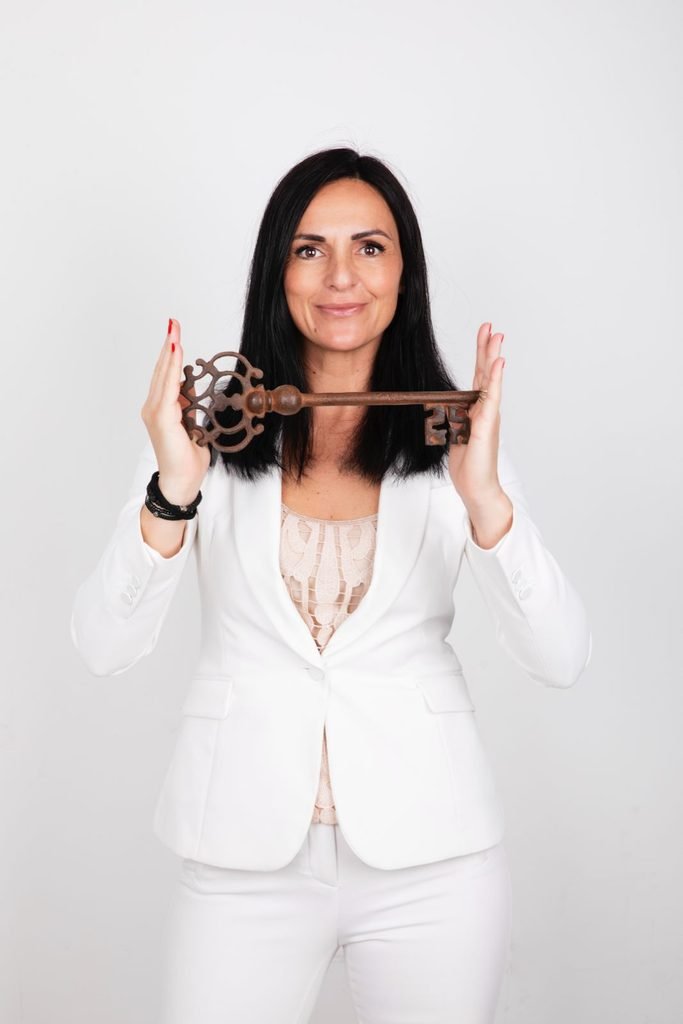
Photo: Fabrizio Vinti